
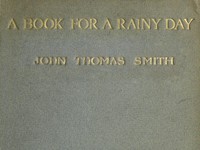
A Book for a Rainy Day; or, Recollections of the Events of the Years 1766-1833
Let's be clear from the start: this book doesn't have a plot. There's no hero's journey or central mystery to solve. Instead, think of it as the ultimate behind-the-scenes documentary. John Thomas Smith, an engraver and keeper of prints at the British Museum, spent his life with his eyes wide open. A Book for a Rainy Day is his collection of everything he remembered: conversations with famous artists like William Hogarth and Joshua Reynolds, brushes with street criminals, descriptions of vanished neighborhoods, and accounts of public hangings that were treated like social events.
The Story
There isn't one linear story. The book is a series of personal memories and collected tales from 1766 to 1833. Smith writes about his childhood, his career in the art world, and the incredible changes he witnessed. One minute he's describing the eccentric habits of a renowned painter, the next he's recounting the exact layout of a tavern frequented by thieves. It's a panoramic, street-level view of history. He captures the smell, noise, and character of London as it transformed from a Georgian city into a modern metropolis.
Why You Should Read It
You read this for the voice. Smith's writing feels immediate and personal, like he's right there telling you these stories. He doesn't judge; he just reports, often with a dry wit. The book is packed with humanity—the grand ambitions of artists and the desperate schemes of the poor exist side-by-side. It makes history feel less like dates and more like real life. You get a sense of how people actually talked, what they worried about, and what made them laugh. It’s the fascinating, unpolished stuff that official histories often leave out.
Final Verdict
This is a perfect book for curious minds who find textbooks dry. If you're a fan of social history, love London, or just enjoy fantastic real-life stories, you'll be hooked. It's also great for dipping in and out of—a true 'book for a rainy day.' Be prepared for a meandering, anecdotal style. It’s not a brisk read, but a slow, rich savoring of a lost world. If you wish you could have a coffee with someone from the 18th century, consider this your invitation.
This is a copyright-free edition. It serves as a testament to our shared literary heritage.
Jessica Lopez
2 years agoI found the author's tone to be very professional yet accessible, the attention to detail regarding the core terminology is flawless. This exceeded my expectations in almost every way.
Linda Miller
7 months agoUnlike many other resources I've purchased before, the step-by-step breakdown of the methodology is extremely helpful for students. The price-to-value ratio here is simply unbeatable.
Susan Lopez
9 months agoFrom a researcher's perspective, the author’s unique perspective adds a fresh layer to the discussion. A solid investment for anyone's personal development.
James Hernandez
3 months agoClear, concise, and incredibly informative.





Paul Taylor
5 months agoI was skeptical about the depth of this book at first, but the author clearly has a deep mastery of the subject matter. A rare gem in a sea of mediocre content.