
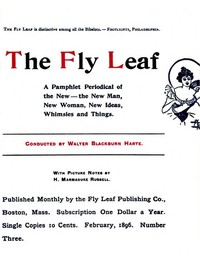
The Fly Leaf, No. 3, Vol. 1, February 1896 by Various
Let's be clear from the start: this isn't a novel. 'The Fly Leaf' is a periodical, a little magazine from February of 1896. Think of it as a literary snack box from the past. There's no overarching plot. Instead, you open it up and find a bunch of different things all bound together.
The Story
There isn't one story. There are many. You might find a short, melancholic tale about a lost love, followed by a humorous essay poking fun at fashion trends of the day. There are poems that range from deeply reflective to playful. Some pieces are signed, many are not. It's a mixed bag. You're not following a character's journey; you're taking a rapid tour through the literary moods and interests of a specific moment in time. One piece feels formal and stiff, the next surprisingly casual and modern. The 'plot' is the collection itself—the juxtaposition of all these different voices creates its own kind of narrative about life in the 1890s.
Why You Should Read It
I loved it for the atmosphere. Reading this feels intimate. The paper, the old typesetting, the topics they chose to write about—it all pulls you into their world. It's less about analyzing great literature and more about connection. You read a line about someone worrying about a newfangled invention or mourning a change in their town, and you realize some human concerns never change. The charm is in the ordinary, the everyday thoughts they decided were worth printing. It's also just fun! Some of the observations are still sharp and funny today. It reminds you that people in fancy old clothes still had a sense of humor and got annoyed by silly things.
Final Verdict
This is a niche pick, but a wonderful one. It's perfect for history lovers who want to go beyond dates and facts to feel the texture of daily life. It's great for writers or curious readers who enjoy seeing how language and storytelling styles have (and haven't) changed. If you like the idea of literary archaeology—dusting off a primary source and seeing what you find—you'll be delighted. Don't go in expecting a tight, modern narrative. Go in ready to explore, to be surprised, and to have a quiet, fascinating conversation with the past.
This masterpiece is free from copyright limitations. Preserving history for future generations.
Ashley Jones
2 years agoIf you enjoy this genre, the pacing is just right, keeping you engaged. Worth every second.
Nancy Smith
1 year agoI started reading out of curiosity and it provides a comprehensive overview perfect for everyone. One of the best books I've read this year.
Lisa Sanchez
1 year agoSimply put, the content flows smoothly from one chapter to the next. I couldn't put it down.
Emily Perez
1 year agoVery interesting perspective.
Jennifer Perez
7 months agoI started reading this with a critical mind, it addresses the common misconceptions in a very professional manner. This exceeded my expectations in almost every way.