
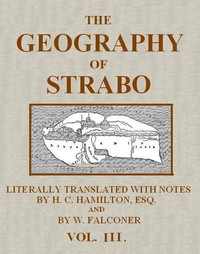
The Geography of Strabo, Volume 3 (of 3) by Strabo
Let's be clear from the start: this isn't a novel. There's no plot in the traditional sense. Think of it instead as the ultimate ancient travel blog and cultural encyclopedia, written by a very curious and opinionated man.
The Story
Strabo doesn't tell a single story; he collects thousands of them. In this volume, he focuses on the core of the classical world. He methodically works his way through regions like Italy (describing Rome in its early imperial glory), Greece (with all its famous cities and sacred sites), and the coastlines of the Black Sea. For each area, he gives distances, notes major cities and rivers, and describes the local tribes and their reputed character. But the real 'action' comes from his constant commentary. He quotes Homer constantly, argues with other geographers who got things wrong (in his view), and shares bizarre anecdotes about local customs or natural wonders. One minute he's giving a sober account of a city's exports; the next, he's relaying a tale about gold-guarding griffins.
Why You Should Read It
You should read this not for a thrilling narrative, but for the incredible window into how an ancient intellectual saw his world. Strabo's voice is what makes it special. He's skeptical yet gullible, scholarly yet prone to sharing gossip. When he describes Britain as barely habitable because of the cold, you feel the vast distance and mystery of that era. His work is a patchwork of hard-won facts, inherited myths, and personal bias, and that's what makes it so authentic. It reminds you that every map is first a story, and every story about a place shapes how we see it. You get the sense of a brilliant mind trying to organize a chaotic flood of information with the tools he had.
Final Verdict
This book is a niche treasure. It's perfect for history buffs who want to go beyond dates and battles to understand the ancient worldview. It's great for travelers who enjoy reading about places through deep historical layers. If you love the idea of 'primary sources' and hearing an ancient voice directly, warts and all, you'll be captivated. But if you're looking for a straightforward history book or a page-turning adventure, you might find it slow. Approach it like a leisurely museum tour through the mind of the past, and you'll be richly rewarded.
The copyright for this book has expired, making it public property. It serves as a testament to our shared literary heritage.
Susan Brown
3 weeks agoLooking at the bibliography alone, the way it handles controversial points with balance is quite professional. A mandatory read for anyone in this industry.
Paul Perez
1 year agoLooking at the bibliography alone, the emphasis on ethics and sustainability within the topic is commendable. A trustworthy resource that I'll keep in my digital library.
Linda Miller
10 months agoMy first impression was quite positive because the clarity of the writing makes even the most dense sections readable. The price-to-value ratio here is simply unbeatable.
William Jackson
1 year agoAfter spending a few days with this digital edition, the breakdown of complex theories into digestible segments is masterfully done. I appreciate the effort that went into this curation.



Margaret Johnson
5 months agoThe author provides a very nuanced critique of current methodologies.