P
Plant Grower World
Guest
- Thread Author
- #1
As you gaze out at your lush greenhouse, the sight of frosty windows and chilly air can be a harsh reality. This is particularly true in colder climates, where winter temperatures can drop to levels that make it difficult to grow certain plants, even with the best insulation. But what if you could harness the natural warmth of your own garden to heat your greenhouse? Compost, the rich byproduct of decomposing organic matter, holds the key to sustainable greenhouse heating.
Compost can be a game-changer for gardeners who want to reduce their environmental footprint while still enjoying a thriving greenhouse. By leveraging the natural heat generated by composting, you can create a warm and cozy environment for your plants to thrive in, without relying on expensive and resource-intensive heating systems. In this article, we’ll explore the ins and outs of compost-based greenhouse heating, from design considerations to maintenance tips.
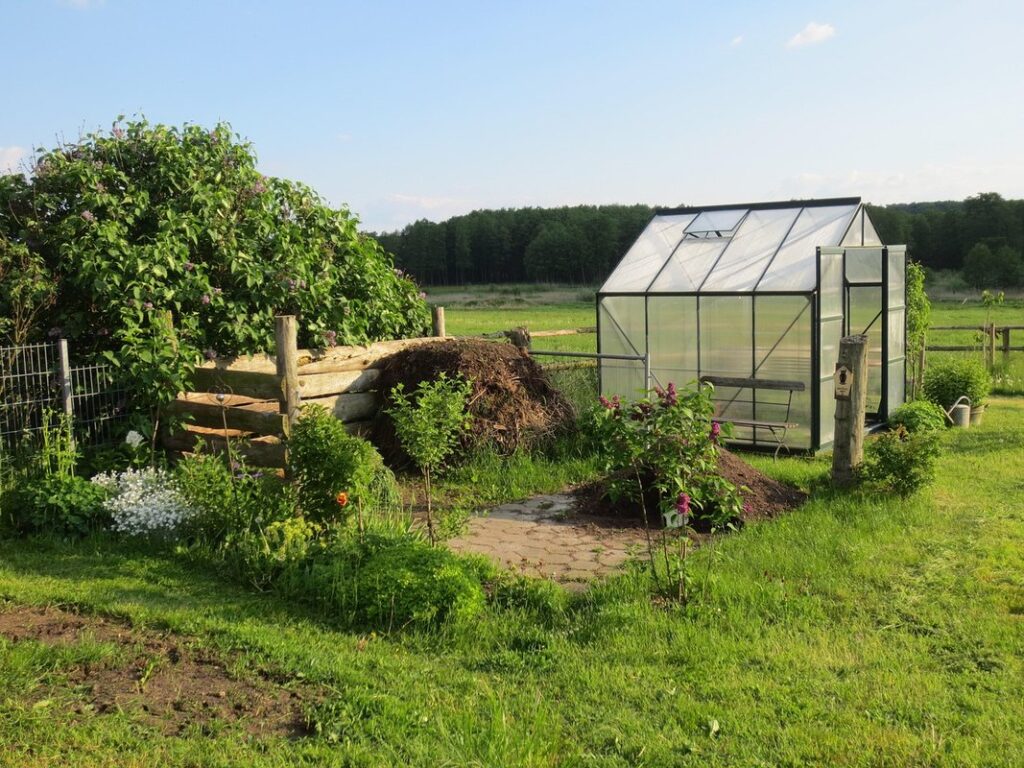
Photo by Nippelsn from Pixabay
Compost can be a surprisingly effective and sustainable way to heat a greenhouse. The key to using compost heating successfully lies in understanding how compost piles generate heat. Compost piles are essentially self-contained, anaerobic digesters that break down organic materials in the absence of oxygen. As the microorganisms in the compost pile feed on the organic matter, they release heat as a byproduct of their metabolic processes. This heat can be harnessed and used to warm a greenhouse.
To design a compost pile that provides a steady source of heat, it’s essential to understand the factors that influence heat generation. The size of the compost pile, the type and quantity of organic materials used, and the moisture levels within the pile all play a role in determining the amount of heat produced. A well-designed compost pile can generate temperatures of up to 140°F (60°C), which is more than sufficient to warm a small greenhouse.
There are several types of compost heating systems, each with its own advantages and limitations. In-pile systems involve placing the heating system within the compost pile itself, while out-of-pile systems use a separate heating unit. Hybrid systems combine elements of both approaches. When designing a compost heating system, several factors must be considered. These include the size of the greenhouse, the climate and temperature requirements, and the type and quantity of organic materials available.
In-pile systems are often preferred for their simplicity and low cost. However, they can be limited by the size of the compost pile and the amount of heat generated. Out-of-pile systems, on the other hand, offer greater flexibility and can be designed to meet specific greenhouse requirements. Hybrid systems offer a compromise between the two approaches, providing a balance between simplicity and flexibility.
To ensure that a compost heating system meets the greenhouse’s heating demands, it’s essential to estimate the heat generation capacity of the compost pile. This can be done by calculating the amount of heat generated per unit of compost material. The key factors to consider include the type and quantity of organic materials, the moisture levels, and the temperature requirements of the greenhouse.
A general rule of thumb is to assume that a well-designed compost pile will generate 1-2 kWh of heat per kilogram of compost material. To estimate the heat generation capacity of a compost pile, multiply the total amount of compost material by the assumed heat generation rate. This will give you an estimate of the total heat generated per hour. You can then compare this figure to the greenhouse’s heating requirements to determine if the compost heating system is sufficient.
To give you a better idea of the calculations involved, here are some examples of heat generation rates for different types of compost materials:
Keep in mind that these are general estimates and the actual heat generation rate will depend on a variety of factors, including the specific compost materials used and the design of the compost pile.
A well-structured compost pile is essential for optimal heat production. The ideal carbon-to-nitrogen (C:N) ratio is crucial, with a balance of 25-30% carbon-rich materials, such as dried leaves or straw, and 70-75% nitrogen-rich materials, like food scraps or manure. Too little carbon and the pile will be too wet and prone to anaerobic conditions, resulting in minimal heat production. Conversely, too much carbon and the pile may not break down effectively, reducing heat output.
Moisture levels also play a significant role. A compost pile should be kept moist, like a damp sponge, but not waterlogged. Adequate moisture helps maintain a stable temperature, ensuring optimal heat production. Aim for a moisture level between 40-60% to prevent drying out or over-saturation.
Aeration is another vital factor, as it allows oxygen to penetrate the pile, facilitating microbial activity and heat generation. Regular turning of the compost pile, every 7-10 days, is necessary to introduce oxygen and prevent anaerobic conditions. You can also add bulking agents like straw or shredded newspaper to improve airflow and structure.
Compost pile size and density significantly impact heat retention and loss. A larger pile with a higher density can retain more heat, but it may also be more challenging to aerate and turn. Conversely, a smaller pile with lower density may lose heat more quickly. Aim for a pile size of 3-4 feet in diameter and 3-4 feet tall, with a density of about 1-2 cubic feet per pound of material.
To balance size and density, consider the following tips: use a mix of coarse and fine materials to achieve a consistent density, add bulking agents to improve airflow, and maintain a consistent moisture level. Regular turning will also help maintain a balanced density and prevent hot spots.
Monitoring compost temperature is essential to optimize heat production. Use a compost thermometer to track temperature, aiming for a range of 130-140°F (54-60°C). Temperatures above 140°F can lead to excessive heat loss, while temperatures below 130°F may indicate inadequate aeration or moisture levels.
Adjust composting conditions as needed to maintain optimal temperatures. If the temperature is too high, reduce the C:N ratio, add more bulking agents, or increase aeration. If the temperature is too low, increase the C:N ratio, add more nitrogen-rich materials, or reduce aeration. Regular monitoring and adjustments will help you fine-tune your composting process, ensuring maximum heat production and a healthy, thriving greenhouse ecosystem.
When integrating a compost heating system with a greenhouse’s climate control system, several design considerations come into play. Temperature control is a primary concern, as the compost heat needs to be balanced with the greenhouse’s temperature requirements. A common approach is to use a buffer tank to regulate the temperature of the compost heat before it’s distributed to the greenhouse. This buffer tank can be designed to maintain a consistent temperature, ensuring that the compost heat is not too hot or too cold for the greenhouse.
Humidity control is also crucial, as excessive moisture can lead to condensation and reduce the effectiveness of the compost heat. A well-designed compost heating system should include a humidity control system that monitors and adjusts the moisture levels in the greenhouse. This can be achieved through the use of sensors and automated controls that regulate the ventilation rate and air exchange.
Air exchange is another critical factor to consider, as it affects the overall efficiency of the compost heating system. A system that allows for adequate air exchange can help to prevent the buildup of toxic gases and maintain a healthy environment for plant growth. When designing the compost heating system, it’s essential to consider the specific climate and humidity requirements of the greenhouse and to ensure that the system is designed to meet these needs.
Automated controls offer numerous benefits for compost heating systems, including improved temperature control, increased efficiency, and reduced labor requirements. However, implementing automated controls can be a complex process, requiring careful consideration of the specific needs and requirements of the greenhouse.
When selecting automated controls, it’s essential to choose technologies that are compatible with the compost heating system and the greenhouse’s climate control system. This may involve using programmable logic controllers (PLCs) or other automation technologies that can integrate with the existing systems. The selection process should also take into account factors such as energy efficiency, reliability, and ease of maintenance.
Some popular options for automated controls include:
Several greenhouses have successfully implemented compost heating systems, demonstrating the potential for cost savings, reduced energy consumption, and improved plant growth. For example, a small-scale greenhouse operation in the Pacific Northwest implemented a compost heating system that reduced their energy costs by 30% and improved plant yields by 25%. Similarly, a large-scale greenhouse in the UK implemented a compost heating system that reduced their carbon emissions by 40% and improved plant quality.
These case studies highlight the importance of careful system design and implementation, as well as the need for ongoing monitoring and maintenance to ensure optimal performance. By learning from these examples, greenhouse operators can develop effective compost heating systems that meet their specific needs and contribute to a more sustainable future.
Implementing compost heating systems can be a complex process, and several common challenges can arise. One of the primary issues is temperature control. Compost piles can generate high temperatures, but they can also drop rapidly if not managed properly. This can lead to inconsistent heat output, making it difficult to maintain a stable greenhouse temperature. Another challenge is moisture management. Compost piles need to be kept moist to facilitate decomposition, but excessive moisture can lead to anaerobic conditions, reducing heat production.
Pest control is also a significant challenge in compost heating systems. Vermin, such as rodents and insects, can be attracted to the compost pile and compromise the system’s integrity. Moreover, pests can also contaminate the compost, reducing its quality and heat output. To mitigate these issues, it’s essential to design and implement compost heating systems with temperature control and moisture management in mind. This can include features such as insulation, ventilation, and pest-proofing measures.
Another challenge is the initial investment required to set up a compost heating system. The cost of materials, equipment, and labor can be substantial, making it a significant barrier to adoption for many growers. Additionally, the time and effort required to maintain the system can be substantial, especially during the startup phase.
While compost heating systems can be effective for small to medium-sized greenhouses, they may not be suitable for large-scale operations. One of the primary limitations is scalability. As the size of the greenhouse increases, the compost pile size and density need to be adjusted accordingly. However, this can lead to logistical and operational challenges, such as increased labor requirements and equipment costs.
Another limitation is cost-effectiveness. Compost heating systems can be expensive to set up and maintain, especially when compared to traditional heating systems. Additionally, the cost of materials and equipment can be substantial, making it challenging to justify the investment for large-scale operations. Furthermore, the space required for compost piles can be substantial, which can lead to land-use conflicts and decreased crop yields.
In large-scale greenhouse operations, it may be more cost-effective to use other heating systems, such as boilers or heat pumps, which can provide more efficient and reliable heat output. However, compost heating systems can still be a viable option for small-scale growers or those looking for a more sustainable and environmentally friendly heating solution.
Despite the challenges and limitations of compost heating systems, there are opportunities for future research and development to improve their efficiency, scalability, and cost-effectiveness. One area of focus could be on developing more efficient composting technologies, such as in-vessel composting or composting aerators, which can improve heat production and reduce labor requirements.
Another area of focus could be on developing more advanced monitoring and control systems, which can help optimize compost pile temperature and moisture levels. This could include the use of sensors, data loggers, and automated control systems to monitor and adjust the compost pile conditions in real-time.
Additionally, research could focus on developing more cost-effective and sustainable materials for compost heating systems, such as using locally sourced materials or designing systems that can be easily disassembled and reused. By addressing these challenges and limitations, compost heating systems can become a more viable and sustainable option for greenhouse operations of all sizes.
In the US, a small-scale organic farm in California implemented a compost heating system to warm its greenhouse for year-round production. The farm’s compost pile, located adjacent to the greenhouse, generated heat through thermophilic decomposition, reaching temperatures of up to 160°F (71°C). The heat was then transferred to the greenhouse through a network of pipes, providing a consistent temperature of around 70°F (21°C) during the winter months.
In the UK, a community-led greenhouse project used compost heating to extend its growing season. The project’s compost pile, made from food waste and other organic materials, generated enough heat to warm the greenhouse to 10°C (50°F) above ambient temperature. This allowed the project to grow a wider range of crops, including sensitive plants that would normally be damaged by frost.
Another example comes from a large-scale greenhouse operation in the Netherlands. This commercial farm implemented a compost heating system to reduce its reliance on fossil fuels and lower its carbon emissions. The system, designed to meet the farm’s specific heat requirements, used a combination of compost piles and anaerobic digesters to generate heat. The farm reported a significant reduction in energy costs and a 20% decrease in greenhouse gas emissions.
These examples demonstrate the potential of compost heating systems to provide sustainable heat for greenhouses. By leveraging the natural heat generated by compost decomposition, these systems can reduce energy costs, lower carbon emissions, and extend growing seasons.
Several key takeaways can be gleaned from these case studies. First, the design and operation of compost heating systems require careful consideration of factors such as compost pile size, density, and location. A well-designed system can provide consistent and reliable heat, while a poorly designed system can lead to reduced performance and increased costs.
Second, the integration of compost heating systems with greenhouse climate control is crucial for optimal performance. This may involve designing a system with automated controls to regulate heat transfer and ensure that the greenhouse remains within a suitable temperature range.
Third, the scalability of compost heating systems is dependent on various factors, including the size of the compost pile, the volume of heat required, and the efficiency of the heat transfer system. Large-scale operations may require more complex systems and larger compost piles to achieve the desired level of heat generation.
While compost heating systems have shown promise in reducing energy costs and greenhouse gas emissions, further research and development is needed to improve their efficiency, scalability, and cost-effectiveness. Potential areas of focus include:
Regular maintenance is crucial to ensure the optimal performance and longevity of compost heating systems. A well-maintained system can provide consistent heat to the greenhouse, while a neglected one can lead to reduced efficiency, equipment failure, and increased costs. The following tasks should be performed regularly to keep the system running smoothly:
Despite regular maintenance, issues can still arise with compost heating systems. Common problems include temperature control issues, system failures, and inadequate heat distribution. To resolve these issues, follow these steps:
Preventative measures can help minimize downtime and ensure the continued operation of compost heating systems. To prevent maintenance-related issues, consider the following strategies:
Compost heating systems can still be effective in cold climates, but additional design considerations are necessary to ensure the system can handle extreme temperatures. This may involve using insulated compost piles, selecting heat-tolerant composting materials, and incorporating backup heating systems to supplement the compost heat during extreme cold snaps.
Achieving the optimal carbon-to-nitrogen ratio in compost piles can be challenging, especially when using diverse organic materials. A general rule of thumb is to aim for a ratio of 25-30 parts carbon to 1 part nitrogen. However, the specific ratio may need to be adjusted based on the materials being composted and the desired heat production levels.
Common mistakes to avoid include inadequate insulation, insufficient aeration, and poor temperature monitoring. When troubleshooting issues, focus on temperature fluctuations, moisture levels, and pest infestations. Regular maintenance tasks, such as monitoring temperature, maintaining aeration, and controlling moisture levels, can help prevent issues and ensure the system runs smoothly.
Yes, compost heating systems can be integrated with other renewable energy sources to create a more sustainable energy mix. This can involve using excess energy from solar or wind power to supplement the compost heat during periods of low production. Such integrated systems can provide a more stable and reliable energy supply, reducing greenhouse gas emissions and dependence on fossil fuels.
To ensure even heat distribution, consider installing temperature sensors and fans to circulate the warm air. Strategies for minimizing heat loss include insulating the greenhouse, using thermal mass materials, and maintaining a consistent temperature gradient between the compost pile and the greenhouse.
Compost can be a game-changer for gardeners who want to reduce their environmental footprint while still enjoying a thriving greenhouse. By leveraging the natural heat generated by composting, you can create a warm and cozy environment for your plants to thrive in, without relying on expensive and resource-intensive heating systems. In this article, we’ll explore the ins and outs of compost-based greenhouse heating, from design considerations to maintenance tips.
Photo by Nippelsn from Pixabay
Benefits of Compost Heating for Greenhouses
Understanding the Basics of Compost Heating
Compost can be a surprisingly effective and sustainable way to heat a greenhouse. The key to using compost heating successfully lies in understanding how compost piles generate heat. Compost piles are essentially self-contained, anaerobic digesters that break down organic materials in the absence of oxygen. As the microorganisms in the compost pile feed on the organic matter, they release heat as a byproduct of their metabolic processes. This heat can be harnessed and used to warm a greenhouse.
To design a compost pile that provides a steady source of heat, it’s essential to understand the factors that influence heat generation. The size of the compost pile, the type and quantity of organic materials used, and the moisture levels within the pile all play a role in determining the amount of heat produced. A well-designed compost pile can generate temperatures of up to 140°F (60°C), which is more than sufficient to warm a small greenhouse.
Compost Heating Systems: Types and Design Considerations
There are several types of compost heating systems, each with its own advantages and limitations. In-pile systems involve placing the heating system within the compost pile itself, while out-of-pile systems use a separate heating unit. Hybrid systems combine elements of both approaches. When designing a compost heating system, several factors must be considered. These include the size of the greenhouse, the climate and temperature requirements, and the type and quantity of organic materials available.
In-pile systems are often preferred for their simplicity and low cost. However, they can be limited by the size of the compost pile and the amount of heat generated. Out-of-pile systems, on the other hand, offer greater flexibility and can be designed to meet specific greenhouse requirements. Hybrid systems offer a compromise between the two approaches, providing a balance between simplicity and flexibility.
Calculating Compost Heat Generation for Greenhouse Requirements
To ensure that a compost heating system meets the greenhouse’s heating demands, it’s essential to estimate the heat generation capacity of the compost pile. This can be done by calculating the amount of heat generated per unit of compost material. The key factors to consider include the type and quantity of organic materials, the moisture levels, and the temperature requirements of the greenhouse.
A general rule of thumb is to assume that a well-designed compost pile will generate 1-2 kWh of heat per kilogram of compost material. To estimate the heat generation capacity of a compost pile, multiply the total amount of compost material by the assumed heat generation rate. This will give you an estimate of the total heat generated per hour. You can then compare this figure to the greenhouse’s heating requirements to determine if the compost heating system is sufficient.
To give you a better idea of the calculations involved, here are some examples of heat generation rates for different types of compost materials:
- Manure: 1.5-2.5 kWh/kg
- Food waste: 1-2 kWh/kg
- Yard trimmings: 0.5-1.5 kWh/kg
Keep in mind that these are general estimates and the actual heat generation rate will depend on a variety of factors, including the specific compost materials used and the design of the compost pile.
Composting Process for Optimal Heat Production
Creating an Ideal Compost Pile for Heat Generation
A well-structured compost pile is essential for optimal heat production. The ideal carbon-to-nitrogen (C:N) ratio is crucial, with a balance of 25-30% carbon-rich materials, such as dried leaves or straw, and 70-75% nitrogen-rich materials, like food scraps or manure. Too little carbon and the pile will be too wet and prone to anaerobic conditions, resulting in minimal heat production. Conversely, too much carbon and the pile may not break down effectively, reducing heat output.
Moisture levels also play a significant role. A compost pile should be kept moist, like a damp sponge, but not waterlogged. Adequate moisture helps maintain a stable temperature, ensuring optimal heat production. Aim for a moisture level between 40-60% to prevent drying out or over-saturation.
Aeration is another vital factor, as it allows oxygen to penetrate the pile, facilitating microbial activity and heat generation. Regular turning of the compost pile, every 7-10 days, is necessary to introduce oxygen and prevent anaerobic conditions. You can also add bulking agents like straw or shredded newspaper to improve airflow and structure.
Managing Compost Pile Size and Density for Heat Retention
Compost pile size and density significantly impact heat retention and loss. A larger pile with a higher density can retain more heat, but it may also be more challenging to aerate and turn. Conversely, a smaller pile with lower density may lose heat more quickly. Aim for a pile size of 3-4 feet in diameter and 3-4 feet tall, with a density of about 1-2 cubic feet per pound of material.
To balance size and density, consider the following tips: use a mix of coarse and fine materials to achieve a consistent density, add bulking agents to improve airflow, and maintain a consistent moisture level. Regular turning will also help maintain a balanced density and prevent hot spots.
Monitoring Compost Temperature and Adjusting as Needed
Monitoring compost temperature is essential to optimize heat production. Use a compost thermometer to track temperature, aiming for a range of 130-140°F (54-60°C). Temperatures above 140°F can lead to excessive heat loss, while temperatures below 130°F may indicate inadequate aeration or moisture levels.
Adjust composting conditions as needed to maintain optimal temperatures. If the temperature is too high, reduce the C:N ratio, add more bulking agents, or increase aeration. If the temperature is too low, increase the C:N ratio, add more nitrogen-rich materials, or reduce aeration. Regular monitoring and adjustments will help you fine-tune your composting process, ensuring maximum heat production and a healthy, thriving greenhouse ecosystem.
Compost Heating System Integration with Greenhouse Climate Control
Designing a Compost Heating System for Greenhouse Integration
When integrating a compost heating system with a greenhouse’s climate control system, several design considerations come into play. Temperature control is a primary concern, as the compost heat needs to be balanced with the greenhouse’s temperature requirements. A common approach is to use a buffer tank to regulate the temperature of the compost heat before it’s distributed to the greenhouse. This buffer tank can be designed to maintain a consistent temperature, ensuring that the compost heat is not too hot or too cold for the greenhouse.
Humidity control is also crucial, as excessive moisture can lead to condensation and reduce the effectiveness of the compost heat. A well-designed compost heating system should include a humidity control system that monitors and adjusts the moisture levels in the greenhouse. This can be achieved through the use of sensors and automated controls that regulate the ventilation rate and air exchange.
Air exchange is another critical factor to consider, as it affects the overall efficiency of the compost heating system. A system that allows for adequate air exchange can help to prevent the buildup of toxic gases and maintain a healthy environment for plant growth. When designing the compost heating system, it’s essential to consider the specific climate and humidity requirements of the greenhouse and to ensure that the system is designed to meet these needs.
Implementing Automated Controls for Compost Heating Systems
Automated controls offer numerous benefits for compost heating systems, including improved temperature control, increased efficiency, and reduced labor requirements. However, implementing automated controls can be a complex process, requiring careful consideration of the specific needs and requirements of the greenhouse.
When selecting automated controls, it’s essential to choose technologies that are compatible with the compost heating system and the greenhouse’s climate control system. This may involve using programmable logic controllers (PLCs) or other automation technologies that can integrate with the existing systems. The selection process should also take into account factors such as energy efficiency, reliability, and ease of maintenance.
Some popular options for automated controls include:
- Temperature sensors and probes that monitor the compost heat and greenhouse temperature
- Ventilation controllers that regulate air exchange and humidity levels
- Programmable timers and scheduling systems that optimize energy usage and temperature control
Case Studies: Successful Compost Heating System Implementations
Several greenhouses have successfully implemented compost heating systems, demonstrating the potential for cost savings, reduced energy consumption, and improved plant growth. For example, a small-scale greenhouse operation in the Pacific Northwest implemented a compost heating system that reduced their energy costs by 30% and improved plant yields by 25%. Similarly, a large-scale greenhouse in the UK implemented a compost heating system that reduced their carbon emissions by 40% and improved plant quality.
These case studies highlight the importance of careful system design and implementation, as well as the need for ongoing monitoring and maintenance to ensure optimal performance. By learning from these examples, greenhouse operators can develop effective compost heating systems that meet their specific needs and contribute to a more sustainable future.
Challenges and Limitations of Compost Heating Systems
Common Challenges in Compost Heating System Implementation
Implementing compost heating systems can be a complex process, and several common challenges can arise. One of the primary issues is temperature control. Compost piles can generate high temperatures, but they can also drop rapidly if not managed properly. This can lead to inconsistent heat output, making it difficult to maintain a stable greenhouse temperature. Another challenge is moisture management. Compost piles need to be kept moist to facilitate decomposition, but excessive moisture can lead to anaerobic conditions, reducing heat production.
Pest control is also a significant challenge in compost heating systems. Vermin, such as rodents and insects, can be attracted to the compost pile and compromise the system’s integrity. Moreover, pests can also contaminate the compost, reducing its quality and heat output. To mitigate these issues, it’s essential to design and implement compost heating systems with temperature control and moisture management in mind. This can include features such as insulation, ventilation, and pest-proofing measures.
Another challenge is the initial investment required to set up a compost heating system. The cost of materials, equipment, and labor can be substantial, making it a significant barrier to adoption for many growers. Additionally, the time and effort required to maintain the system can be substantial, especially during the startup phase.
Limitations of Compost Heating Systems for Large-Scale Greenhouse Operations
While compost heating systems can be effective for small to medium-sized greenhouses, they may not be suitable for large-scale operations. One of the primary limitations is scalability. As the size of the greenhouse increases, the compost pile size and density need to be adjusted accordingly. However, this can lead to logistical and operational challenges, such as increased labor requirements and equipment costs.
Another limitation is cost-effectiveness. Compost heating systems can be expensive to set up and maintain, especially when compared to traditional heating systems. Additionally, the cost of materials and equipment can be substantial, making it challenging to justify the investment for large-scale operations. Furthermore, the space required for compost piles can be substantial, which can lead to land-use conflicts and decreased crop yields.
In large-scale greenhouse operations, it may be more cost-effective to use other heating systems, such as boilers or heat pumps, which can provide more efficient and reliable heat output. However, compost heating systems can still be a viable option for small-scale growers or those looking for a more sustainable and environmentally friendly heating solution.
Opportunities for Future Research and Development
Despite the challenges and limitations of compost heating systems, there are opportunities for future research and development to improve their efficiency, scalability, and cost-effectiveness. One area of focus could be on developing more efficient composting technologies, such as in-vessel composting or composting aerators, which can improve heat production and reduce labor requirements.
Another area of focus could be on developing more advanced monitoring and control systems, which can help optimize compost pile temperature and moisture levels. This could include the use of sensors, data loggers, and automated control systems to monitor and adjust the compost pile conditions in real-time.
Additionally, research could focus on developing more cost-effective and sustainable materials for compost heating systems, such as using locally sourced materials or designing systems that can be easily disassembled and reused. By addressing these challenges and limitations, compost heating systems can become a more viable and sustainable option for greenhouse operations of all sizes.
Case Studies: Successful Compost Heating System Implementations
Real-World Examples of Compost Heating System Success
In the US, a small-scale organic farm in California implemented a compost heating system to warm its greenhouse for year-round production. The farm’s compost pile, located adjacent to the greenhouse, generated heat through thermophilic decomposition, reaching temperatures of up to 160°F (71°C). The heat was then transferred to the greenhouse through a network of pipes, providing a consistent temperature of around 70°F (21°C) during the winter months.
In the UK, a community-led greenhouse project used compost heating to extend its growing season. The project’s compost pile, made from food waste and other organic materials, generated enough heat to warm the greenhouse to 10°C (50°F) above ambient temperature. This allowed the project to grow a wider range of crops, including sensitive plants that would normally be damaged by frost.
Another example comes from a large-scale greenhouse operation in the Netherlands. This commercial farm implemented a compost heating system to reduce its reliance on fossil fuels and lower its carbon emissions. The system, designed to meet the farm’s specific heat requirements, used a combination of compost piles and anaerobic digesters to generate heat. The farm reported a significant reduction in energy costs and a 20% decrease in greenhouse gas emissions.
These examples demonstrate the potential of compost heating systems to provide sustainable heat for greenhouses. By leveraging the natural heat generated by compost decomposition, these systems can reduce energy costs, lower carbon emissions, and extend growing seasons.
Lessons Learned from Compost Heating System Implementation
Several key takeaways can be gleaned from these case studies. First, the design and operation of compost heating systems require careful consideration of factors such as compost pile size, density, and location. A well-designed system can provide consistent and reliable heat, while a poorly designed system can lead to reduced performance and increased costs.
Second, the integration of compost heating systems with greenhouse climate control is crucial for optimal performance. This may involve designing a system with automated controls to regulate heat transfer and ensure that the greenhouse remains within a suitable temperature range.
Third, the scalability of compost heating systems is dependent on various factors, including the size of the compost pile, the volume of heat required, and the efficiency of the heat transfer system. Large-scale operations may require more complex systems and larger compost piles to achieve the desired level of heat generation.
Future Directions for Compost Heating System Research and Development
While compost heating systems have shown promise in reducing energy costs and greenhouse gas emissions, further research and development is needed to improve their efficiency, scalability, and cost-effectiveness. Potential areas of focus include:
- Developing more efficient heat transfer systems to reduce energy losses and increase system efficiency
- Investigating the use of different types of compost materials, such as agricultural waste or sewage sludge, to optimize heat generation
- Exploring the potential for integrating compost heating systems with other renewable energy sources, such as solar or wind power
- Developing more sophisticated control systems to optimize heat transfer and minimize energy consumption.
Maintenance and Troubleshooting of Compost Heating Systems
Regular Maintenance Tasks for Compost Heating Systems
Regular maintenance is crucial to ensure the optimal performance and longevity of compost heating systems. A well-maintained system can provide consistent heat to the greenhouse, while a neglected one can lead to reduced efficiency, equipment failure, and increased costs. The following tasks should be performed regularly to keep the system running smoothly:
- Monitor and record temperature readings to ensure the system is functioning as expected.
- Check and clean the heating elements, such as pipes and heat exchangers, to prevent clogging and damage.
- Inspect the compost pile for signs of overheating, underheating, or inadequate aeration.
- Perform routine checks on the system’s plumbing, pumps, and valves to ensure they are functioning correctly.
- Clean and maintain the system’s controls, including sensors, meters, and automation equipment.
Troubleshooting Common Issues with Compost Heating Systems
Despite regular maintenance, issues can still arise with compost heating systems. Common problems include temperature control issues, system failures, and inadequate heat distribution. To resolve these issues, follow these steps:
- Check the system’s controls and automation equipment to ensure they are functioning correctly.
- Inspect the heating elements and pipes for blockages or damage.
- Verify that the compost pile is at the optimal temperature range (typically between 130°F and 140°F).
- Check the system’s plumbing and pumps for blockages or leaks.
- Consult the system’s documentation or manufacturer’s guidelines for troubleshooting and repair procedures.
Preventative Measures for Compost Heating System Maintenance
Preventative measures can help minimize downtime and ensure the continued operation of compost heating systems. To prevent maintenance-related issues, consider the following strategies:
- Regularly inspect and maintain the system’s components, including heating elements, pipes, and controls.
- Implement a scheduled maintenance program to catch potential issues before they become major problems.
- Train personnel on the system’s operation, maintenance, and troubleshooting procedures.
- Consider installing monitoring equipment, such as temperature sensors and data loggers, to track system performance and detect potential issues early.
- Develop a comprehensive maintenance plan that includes routine inspections, repairs, and replacements of worn or damaged components.
Frequently Asked Questions
What if my greenhouse is located in a cold climate with harsh winters? Can compost heating systems still be effective?
Compost heating systems can still be effective in cold climates, but additional design considerations are necessary to ensure the system can handle extreme temperatures. This may involve using insulated compost piles, selecting heat-tolerant composting materials, and incorporating backup heating systems to supplement the compost heat during extreme cold snaps.
How do I balance the carbon-to-nitrogen ratio in my compost pile to optimize heat production, especially when using a mix of organic materials?
Achieving the optimal carbon-to-nitrogen ratio in compost piles can be challenging, especially when using diverse organic materials. A general rule of thumb is to aim for a ratio of 25-30 parts carbon to 1 part nitrogen. However, the specific ratio may need to be adjusted based on the materials being composted and the desired heat production levels.
What are some common mistakes to avoid when designing and implementing a compost heating system, and how can I troubleshoot issues that arise?
Common mistakes to avoid include inadequate insulation, insufficient aeration, and poor temperature monitoring. When troubleshooting issues, focus on temperature fluctuations, moisture levels, and pest infestations. Regular maintenance tasks, such as monitoring temperature, maintaining aeration, and controlling moisture levels, can help prevent issues and ensure the system runs smoothly.
Can compost heating systems be integrated with other renewable energy sources, such as solar or wind power, to create a more sustainable energy mix?
Yes, compost heating systems can be integrated with other renewable energy sources to create a more sustainable energy mix. This can involve using excess energy from solar or wind power to supplement the compost heat during periods of low production. Such integrated systems can provide a more stable and reliable energy supply, reducing greenhouse gas emissions and dependence on fossil fuels.
How do I ensure that the heat generated by my compost heating system is evenly distributed throughout the greenhouse, and what are some strategies for minimizing heat loss?
To ensure even heat distribution, consider installing temperature sensors and fans to circulate the warm air. Strategies for minimizing heat loss include insulating the greenhouse, using thermal mass materials, and maintaining a consistent temperature gradient between the compost pile and the greenhouse.