
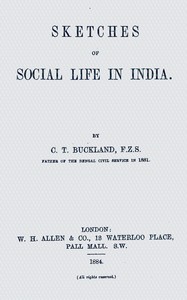
Sketches of social life in India by C. T. Buckland
The Story
This isn't a novel with a single plot, but a collection of personal essays and observations. Buckland, a British civil servant, wrote these pieces based on his decades living and working in India during the height of the British Raj. He acts as our guide, walking us through bazaars bursting with color, describing elaborate wedding ceremonies, and sitting in on village councils. He paints pictures of monsoon rains transforming the landscape and the quiet dignity of rural life. He also turns his eye on his fellow colonists, noting their habits, their misunderstandings, and their attempts to recreate a little England under the Indian sun.
The 'story' is the unfolding of a society through dozens of small moments. You see the complexity of Indian social structures, the importance of religion and custom, and the sheer variety of people from different regions and backgrounds. It's a mosaic of life, assembled one thoughtful, often amused, sketch at a time.
Why You Should Read It
What makes this book special is Buckland's voice. He's not a distant historian; he's a man in the middle of it all, and his writing feels immediate. He has a keen eye for detail and a dry sense of humor. You can tell he is genuinely fascinated by the world around him, even when he doesn't fully understand it. He avoids sweeping judgments, instead focusing on specific people and events he encountered.
Reading this today, it offers a raw, unfiltered look at the colonial era from someone who was part of the system. You get the perspective of the time without modern commentary, which lets you draw your own conclusions. It challenges the simple 'good vs. bad' narrative and replaces it with something more complicated: a record of daily interaction, curiosity, and sometimes, profound cultural disconnect.
Final Verdict
Perfect for history lovers who want to move beyond politics and battles into the heart of everyday life. If you enjoy travel writing, personal journals, or social anthropology, you'll find a lot to love here. It's also great for anyone interested in India's rich cultural history. Be warned: it's a product of its time, so some attitudes will feel outdated. But if you can read it as the fascinating primary document it is—a smart man's snapshot of a world in motion—you'll be rewarded with a truly unique and engaging glimpse into the past. Think of it as a long, captivating conversation with a well-traveled, observant friend from the 19th century.
There are no legal restrictions on this material. Share knowledge freely with the world.
Ashley Anderson
1 month agoI decided to give this a try based on a colleague's recommendation, the wealth of information provided exceeds the average market standard. Highly recommended for those seeking credible information.
Barbara Thomas
5 months agoExactly what I was looking for, thanks!
Mary Perez
2 years agoFrom a researcher's perspective, the level of detail in the second half of the book is truly impressive. A solid investment for anyone's personal development.
Elizabeth Williams
11 months agoGiven the current trends in this field, the author doesn't just scratch the surface but goes into meaningful detail. A mandatory read for anyone in this industry.






Christopher Davis
1 year agoAfter spending a few days with this digital edition, the transition between theoretical knowledge and practical application is seamless. An excellent example of how quality digital books should be formatted.