
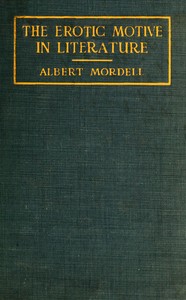
The Erotic Motive in Literature by Albert Mordell
Published in 1919, Albert Mordell's The Erotic Motive in Literature isn't a novel with a plot in the traditional sense. Think of it as a literary detective story where the crime scene is the entire Western canon and the suspect is the human subconscious. Mordell, armed with the then-explosive theories of Sigmund Freud, sets out to prove one central claim: that the driving force behind all artistic creation is sublimated erotic energy. He digs into the lives and works of major authors, from Shakespeare and Dante to Browning and Poe, arguing that their stories, poems, and characters are not just products of imagination, but complex disguises for their own repressed wishes, childhood fixations, and personal conflicts.
Why You Should Read It
This book is a time capsule of a specific moment in how we think about art. Reading it today is a trip. Some of Mordell's interpretations will feel incredibly dated or reductive—you'll likely roll your eyes at points. But that's part of the fun! It forces you to engage, to question, and to separate the insightful from the absurd. Beyond the Freudian framework, there's a valuable core idea here: that art is deeply personal. Mordell reminds us that writers are human beings with messy lives, and their work is often a way to process that mess. It encourages you to look for the person behind the page.
Final Verdict
This is a perfect pick for curious readers who love literary history and aren't afraid of a controversial take. It's for anyone who enjoys pulling back the curtain to see how theories about art and the mind have changed over the last century. You don't need to be a psychology expert, just someone ready for a spirited, thought-provoking, and often surprising conversation with a book. It's not the final word on why we create stories, but it's a fascinating and bold early chapter in that ongoing discussion.
This masterpiece is free from copyright limitations. Share knowledge freely with the world.
Mary Nguyen
8 months agoVery interesting perspective.


Noah Anderson
1 year agoFast paced, good book.