About 272 minutes
A Man's Hearth — Reading Companion
Classic Romance
62,527 recorded words. 2 minutes difference from this book's estimate.
View Gutenberg source #36503
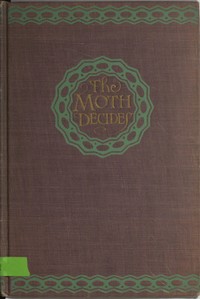
This digital edition of The Moth Decides: A Novel — Reading Notes is described by source-level measurements including 62,798 words, 4 hr 34 min estimated reading time, and 6 detected text sections.
The text analysis averages about 13.0 words per sentence, while the detected sections provide another way to judge how the source is divided.
Project Gutenberg metadata also associates the work with “Love stories,” connecting these edition facts with the source record’s subject description.
Explore this collection
These alternatives are selected using recorded categories and estimated reading time.
About 272 minutes
Classic Romance
62,527 recorded words. 2 minutes difference from this book's estimate.
View Gutenberg source #36503About 289 minutes
Classic Romance
66,318 recorded words. 15 minutes difference from this book's estimate.
View Gutenberg source #21259About 290 minutes
Classic Romance
66,696 recorded words. 16 minutes difference from this book's estimate.
View Gutenberg source #12639Search stored excerpts and compare books → Choose by your preferences →
Choices use stored catalog measurements. Estimates vary with reading speed. A shared category is a catalog label, not a claim that two books have the same argument or literary quality.
Search reads excerpt text stored with this catalog and links to its associated Gutenberg record. The connection is stored in the site database; this tool does not recheck that every excerpt is word-for-word identical to that external record. Excerpt search does not cover every chapter and does not verify historical publication dates.
Catalog snapshot checked: 2026-09-26. Coverage: 89 public books, 89 available source excerpts.
Calculated from edition completeness, EPUB availability, text structure and catalogue metadata. Not a user rating.
Total of 100 points, scaled to a 2.5-5.0 range. Editions with an empty description or a missing EPUB file are not scored.
Public-domain source text
The source text is kept in the dedicated reader, separate from this catalogue record and its commentary.
From its first paragraph, The Moth Decides establishes a narrator attentive to small, telling details. The story opens with Louise waking to a 'slight abrasion in the shingle roof through which morning blinked'—a sensory image that also hints at the cottage's imperfection. The old Dutch clock, with its 'wiry, indignant tick' and 'jerky, twanging spite,' becomes a character in its own right, marking time with an almost comic irritation. Jewell's prose lingers on such particulars, building a world where a roof leak or a clock's chime carries emotional weight.
The narrative voice in the excerpts moves fluidly between lyrical introspection and dry, observational humor. When Louise lies in 'a sort of half pleasant lethargy,' the prose turns dreamy: 'Tears are like suave drugs: under their mystic persuasion life may assume the lovely softness of a mirage.' Yet the same narrator can undercut sentiment with a wry aside, as when describing the Rev. Needham's bench-building: 'The clergyman had perspired a great deal, and gone about with a dogged look. They were all mightily relieved when the task was at last completed. It seemed to simplify life.' This tonal range—from the near-poetic to the gently mocking—gives the novel a distinctive, unpredictable texture.
Jewell frequently enters characters' minds, rendering their doubts in a style that mimics the rhythm of anxious thought. Barry's walk is described as 'groping, indecisive,' each step a question: 'Whither? Why? How long? What is best? What is best? What is best?' The repetition and fragmentation convey a mind caught in a loop. Similarly, Miss Whitcom 'ponders past, present, future' before a wavy mirror, the distortion literalizing her uncertain self-image. These interior passages contrast with the more brisk, action-driven scenes, creating a rhythm of pause and movement that mirrors the characters' own hesitations.
Alongside the romantic tension, Jewell threads moments of everyday comedy that ground the story in the physical world. The crisis over missing raisins for an Indian meal pudding—resolved when the package is found 'lying out on the path where it had slipped from the grocer boy's basket'—is treated with mock gravity: 'The pudding was saved, but what a shock to one's whole system!' The hammock scene, where Mrs. Needham 'dropped fearlessly into the hammock' while her sister notes that 'none but newcomers possessed that sublime faith in hammock ropes,' adds a layer of gentle satire about resort life. These episodes prevent the novel from becoming overly solemn, balancing the characters' internal dramas with the trivial but genuine concerns of a summer household.
Readers should attend to how Jewell uses the cottage setting as a pressure cooker for emotion and comedy alike. The novel's pace alternates between slow, reflective passages and brisk, dialogue-driven scenes; noticing these shifts can illuminate the characters' inner conflicts. The title's metaphor—the moth deciding—suggests a creature drawn to light but vulnerable to burning, a tension that plays out in the characters' choices throughout the story.
That Dutch clock’s tick stayed with me long after the cottage faded, that wiry, indignant little heartbeat of ordinary life. It reminded me of how another book held a similar pulse, quiet and persistent. The Tracer of Lost Persons — Inside the Classic carries that same gentle insistence, like waiting for Eliza’s missing raisins to matter more than they should. Some stories simply linger.
Capture what you thought, learned, and would like to remember.