
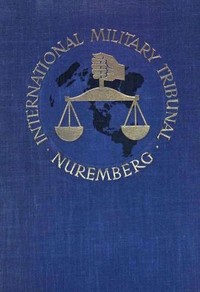
Trial of the Major War Criminals Before the International Military Tribunal,…
This isn't a novel with a plot in the traditional sense. Instead, Trial of the Major War Criminals is the complete, official record of the International Military Tribunal held in Nuremberg, Germany, from 1945 to 1946. The 'story' is the trial itself. The Allies—the United States, Great Britain, France, and the Soviet Union—put 24 of the most senior Nazi leaders on trial for crimes against peace, war crimes, and crimes against humanity. Names like Hermann Göring, Rudolf Hess, and Joachim von Ribbentrop sit in the defendant's dock.
The Story
The book follows the trial day by day. It starts with the prosecution laying out its massive case, presenting documents, films, and witness testimony that detailed the horrors of the Holocaust and the aggressive war. Then, you hear from the defense. Their arguments range from flat denial to the claim that they were only soldiers or bureaucrats doing their duty. Finally, the judges deliberate and deliver their verdicts: twelve death sentences, three life imprisonments, four lesser sentences, and three acquittals. The arc is the search for justice in the aftermath of unimaginable evil.
Why You Should Read It
You should read it because it removes all the filters. There's no narrator telling you what to think. You are confronted directly with the words of the perpetrators, the victims (through testimony), and the architects of this new justice. It's shocking to read the cold, bureaucratic language used to plan genocide, and equally powerful to see the legal minds trying to create a framework to condemn it. It makes abstract concepts like 'war crimes' painfully specific and real. This book doesn't just tell you history happened; it lets you listen in as it was being made.
Final Verdict
This is essential reading for anyone interested in World War II, law, ethics, or human nature. It's perfect for history buffs who want to go beyond the battlefields and into the courtroom where the moral reckoning happened. It's also for readers who appreciate primary sources and want to form their own understanding. Be warned: it is dense, legalistic, and contains graphic descriptions of atrocities. It's not a casual read, but for those willing to engage with it, it is a profoundly important one. Think of it less as a book to enjoy and more as an experience that changes how you see the world.
This content is free to share and distribute. Access is open to everyone around the world.
Linda Walker
4 months agoVery helpful, thanks.
Paul Harris
1 year agoSurprisingly enough, the content flows smoothly from one chapter to the next. Absolutely essential reading.
William Sanchez
1 year agoHonestly, the flow of the text seems very fluid. I would gladly recommend this title.

David Smith
4 months agoThis was exactly the kind of deep dive I was searching for, the critical analysis of current industry standards is very timely. I appreciate the effort that went into this curation.