
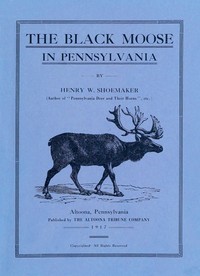
The Black Moose in Pennsylvania by Henry W. Shoemaker
If you like creepy, old-fashioned mysteries, The Black Moose in Pennsylvania is perfect for you. Henry W. Shoemaker collected stories about a massive black moose that was spotted in the forests of Pennsylvania in the early 1900s. People were scared and fascinated. This isn't just nature writing—it's a folk tale you can really sink your teeth into.
The Story
Here’s how it goes: in the 1910s, hunters and farmers starting telling wild tales about a giant black moose, bigger than any elk, roaming the ridges of Centre County and Clearfield County. Some thought it was a ghost—it would appear then vanish just as fast. Others said it was a real moose, escaped from a circus or just on the move from Canada. Shoemaker was a folklore pioneer—he rode trains, talked to old-timers in taverns and farmhouses, and pulled together every report he could find. He wrote down who saw it, where, and when—like an X-Files episode, but written before Mulder and Scully were even dreamed up. The “mystery” part is that nobody tracked it down, shot it, or trapped it. It is a story about a thing that exists just off the edge of our evidence.
Why You Should Read It
First of all, this book feels like sitting around a campfire. The writing is 100 years old-style, but Shoemaker has a soul you recognize instantly—he wants to believe in the mystery. You get a feeling of deep place: the smell of coal smoke in towns, the silent danger of the deep woods. Also, it’s pretty mind-blowing to realize that so many people, like whole fire crews of men, witnessed the same phenomenon. Shoemaker teaches you how oral history works—how a community holds onto a shared secret. It’s secretly a book about the edge of what’s normal, about un-verified truths, and about the wilds that still disappear into human memory. You’ll finish it and immediately want to look up old newspapers or drive out to blackspots in PA to search for hooves.
Final Verdict
The Black Moose in Pennsylvania is perfect for mystery lovers, especially if you like real local weirdness. It fits hand-in-glove with cryptozoology, old American folklore, and the kind of rural history that most shelves miss. Read it if you’ve ever camped somewhere and felt like something was watching back. Also great for fans of Laura Z. Hobson or if you wrote a term paper on the Jersey Devil. But casual: you’ll walk into a conversation at the pub and start talking about the moose. It also sits right next to Ben Sesock or Joseph A. Citro’s stories. But unless you collect seriously weird supernatural casefiles—you still will eat it up as strong nature writing. Don’t need to love hunting—just love stories with no neat endings. 5 stars.
This text is dedicated to the public domain. It is now common property for all to enjoy.
Sarah Jones
6 months agoI was skeptical about the depth of this book at first, but the chapter on advanced strategies offers insights I haven't seen elsewhere. I am looking forward to the author's next publication.
Nancy Wilson
3 months agoAfter a thorough walkthrough of the table of contents, the wealth of information provided exceeds the average market standard. This is a solid reference for both beginners and experts.
Emily Thomas
1 year agoI found the author's tone to be very professional yet accessible, the data points used to support the main thesis are quite robust. Truly a masterpiece of digital educational material.
Sarah Thompson
9 months agoAs a professional in this niche, the emphasis on ethics and sustainability within the topic is commendable. A refreshing and intellectually stimulating read.









Paul Martin
8 months agoI stumbled upon this title during my weekend research and the way the author breaks down the core concepts is remarkably clear. Top-tier content that deserves more recognition.