About 325 minutes
When a Man's Single: A Tale of Literary Life — A Reader’s Guide
Classic Romance
74,525 recorded words. 1 minutes difference from this book's estimate.
View Gutenberg source #41031
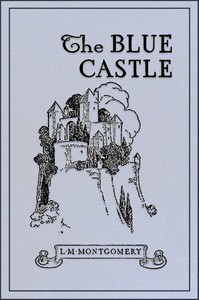
This digital edition of The Blue Castle: a novel — Text and Context is described by source-level measurements including 74,859 words, 5 hr 26 min estimated reading time, and 47 detected text sections.
The text analysis averages about 12.7 words per sentence, while the detected sections provide another way to judge how the source is divided.
Project Gutenberg metadata also associates the work with “Self-actualization (Psychology) -- Fiction,” connecting these edition facts with the source record’s subject description.
Explore this collection
These alternatives are selected using recorded categories and estimated reading time.
About 325 minutes
Classic Romance
74,525 recorded words. 1 minutes difference from this book's estimate.
View Gutenberg source #41031About 328 minutes
Classic Romance
75,412 recorded words. 2 minutes difference from this book's estimate.
View Gutenberg source #13396About 315 minutes
Classic Romance
72,280 recorded words. 11 minutes difference from this book's estimate.
View Gutenberg source #54011Search stored excerpts and compare books → Choose by your preferences →
Choices use stored catalog measurements. Estimates vary with reading speed. A shared category is a catalog label, not a claim that two books have the same argument or literary quality.
Search reads excerpt text stored with this catalog and links to its associated Gutenberg record. The connection is stored in the site database; this tool does not recheck that every excerpt is word-for-word identical to that external record. Excerpt search does not cover every chapter and does not verify historical publication dates.
Catalog snapshot checked: 2026-09-26. Coverage: 89 public books, 89 available source excerpts.
Calculated from edition completeness, EPUB availability, text structure and catalogue metadata. Not a user rating.
Total of 100 points, scaled to a 2.5-5.0 range. Editions with an empty description or a missing EPUB file are not scored.
Public-domain source text
The source text is kept in the dedicated reader, separate from this catalogue record and its commentary.
The novel begins with a single rainstorm that reroutes Valancy Stirling’s entire life—a premise Montgomery announces directly in the first paragraph. Valancy wakes on her twenty-ninth birthday to the realization that she is “unsought by any man,” a failure in the eyes of her family and the community of Deerwood. The opening pages establish a voice that is both wry and tender: Valancy dares not cry for fear of bringing on a heart pain, and she imagines answering her mother’s prying questions with the plain truth that she is crying because she cannot marry. The narrative tone shifts between Valancy’s internal rebellion and the suffocating propriety of the Stirling clan, setting up a conflict between duty and desire that drives the early chapters.
The first chapter hinges on a single meteorological detail: rain. Montgomery uses the weather not as backdrop but as a causal agent. Had it not rained, Valancy would have attended Aunt Wellington’s engagement picnic, and Dr. Trent would have gone to Montreal. Instead, she stays home, receives a devastating medical diagnosis, and begins to act on impulses she had long suppressed. The rain is a narrative lever that tips Valancy from passive endurance into active choice. Readers should note how Montgomery returns to weather imagery throughout the excerpts—moonlight, wind, the “white splendour of moonshine”—as markers of Valancy’s changing inner state. The opening rain is the first of many atmospheric details that carry emotional weight.
Valancy’s narration is marked by a dry, self-deprecating humor that undercuts her despair. She thinks of her mother’s questions as “minute, persistent, mosquito-like,” and reflects that being an old maid “couldn’t possibly be as dreadful as being married to an Uncle Wellington or an Uncle Benjamin.” This voice gives the reader access to her inner life—a place where she is far more perceptive and spirited than her family allows her to be. The excerpts show her longing for romance but also her clear-eyed view of the marriages around her. Montgomery builds sympathy not through pathos alone but through Valancy’s intelligence and wit, which make her confinement feel all the more unjust. The reader is positioned to root for her escape from the start.
Valancy tells Barney about her “Blue Castle” in the moonlight, a private fantasy she has never shared before. The castle is not described in detail in the excerpts, but its function is clear: it is a space of freedom and beauty that she has kept hidden from her family. Montgomery uses the castle as a symbol of Valancy’s inner life—a place where she can be herself. When she finally speaks of it to Barney, it marks a turning point in their relationship. Readers should watch for how the castle evolves as Valancy’s circumstances change. It is not a static dream but a flexible metaphor that adapts to her growing sense of agency. The castle is also a counterpoint to the cramped, judgmental world of the Stirlings.
Valancy’s diagnosis—a heart condition that she believes will kill her within a year—is the catalyst for her rebellion. Yet in the later excerpts, love transforms her relationship with mortality. She thinks, “Love had cast out her last fear,” and feels that death “could cheat her of nothing.” Montgomery intertwines romantic awakening with a confrontation with finitude. Valancy’s decision to live fully, knowing she may die soon, gives the love story an urgency that prevents it from becoming merely sentimental. The excerpts show her savoring a single perfect hour with Barney, aware that no one else can take it from her. This thread gives the novel a philosophical depth beneath its romantic surface.
Montgomery’s prose rewards attention to small details: the way a character’s voice shifts, the recurrence of weather and light, the precise wording of Valancy’s self-assessments. The excerpts offer a clear arc from constraint to liberation, but the full novel may complicate that trajectory. Readers should note how Montgomery balances Valancy’s inner transformation with the external pressures of family and community. The Blue Castle is both a romance and a study of a woman learning to claim her own life, one choice at a time.
That rainy afternoon, I kept returning to Valancy’s quiet rebellion, how a storm gave her permission to choose her own life. Later, I found myself thinking about that same stubbornness in another woman’s story, one who also turned toward something softer than duty. The Old Helmet, Volume I — Key Ideas to Explore sat nearby, and I simply picked it up, letting the rain decide.
A brief reflection can help important ideas stay with you longer.