About 221 minutes
The Younger Sister: A Novel, Vol. I. — Context and Discussion
Classic Romance
50,708 recorded words. 8 minutes difference from this book's estimate.
View Gutenberg source #54010
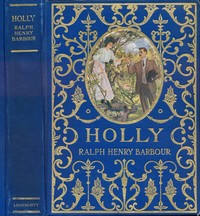
Holly: The Romance of a Southern Girl — Context and Discussion can be approached with a clearer sense of reading commitment from its source measurements: 48,913 words, 3 hr 33 min estimated reading time, and 18 detected text sections.
The text analysis averages about 14.8 words per sentence, while the detected sections provide another way to judge how the source is divided.
Project Gutenberg metadata also associates the work with “Love stories,” connecting these edition facts with the source record’s subject description.
Explore this collection
These alternatives are selected using recorded categories and estimated reading time.
About 221 minutes
Classic Romance
50,708 recorded words. 8 minutes difference from this book's estimate.
View Gutenberg source #54010About 196 minutes
Classic Romance
44,969 recorded words. 17 minutes difference from this book's estimate.
View Gutenberg source #49282About 246 minutes
Classic Romance
56,363 recorded words. 33 minutes difference from this book's estimate.
View Gutenberg source #71024Search stored excerpts and compare books → Choose by your preferences →
Choices use stored catalog measurements. Estimates vary with reading speed. A shared category is a catalog label, not a claim that two books have the same argument or literary quality.
Search reads excerpt text stored with this catalog and links to its associated Gutenberg record. The connection is stored in the site database; this tool does not recheck that every excerpt is word-for-word identical to that external record. Excerpt search does not cover every chapter and does not verify historical publication dates.
Catalog snapshot checked: 2026-09-26. Coverage: 89 public books, 89 available source excerpts.
Calculated from edition completeness, EPUB availability, text structure and catalogue metadata. Not a user rating.
Total of 100 points, scaled to a 2.5-5.0 range. Editions with an empty description or a missing EPUB file are not scored.
Public-domain source text
The source text is kept in the dedicated reader, separate from this catalogue record and its commentary.
Ralph Henry Barbour's Holly: The Romance of a Southern Girl opens with a striking shift in narrative pace. The first chapter dwells on Holly's grief at twelve, rendered in long, reflective sentences that trace her rebellion against death. The prose slows to match her paralysis: 'grieved passionately and rebelliously, giving way so abjectly to her sorrow.' Then, abruptly, the journey away from Waynewood begins, and the tempo quickens. By the time Holly reaches young adulthood, the narrative has settled into a rhythm of lazy garden dialogues and flirtatious banter, where time itself becomes an anachronism.
The opening chapters treat Holly's bereavement with unusual gravity for a romance. Barbour devotes several paragraphs to the psychology of a twelve-year-old confronting death, using a measured, almost clinical tone: 'At that age one has become too wise to find comfort in the vague and beautiful explanations.' The prose is dense with subordinate clauses, mirroring Holly's tangled emotions. But once the journey begins, the sentences shorten. The carriage ride, the new scenes—the narrative accelerates. By the time Holly meets Winthrop, the pace has relaxed into the languid exchanges of a Southern summer. In one scene, Winthrop refuses to check his watch, declaring that 'watches and clocks are anachronisms here.' The dialogue becomes playful, the paragraphs airy. This deliberate deceleration from grief to leisure is the novel's most distinctive structural feature.
Barbour's narrative voice shifts between a formal, omniscient register and the colloquial rhythms of his characters. The opening paragraphs employ a literary, almost philosophical tone—'the quiet stream of her life... flowed placidly'—but Holly's own speech is peppered with regionalisms like 'Shucks!' and 'I reckon.' The setting itself exerts a pressure on the language. Winthrop, a Northerner perhaps, remarks on the timelessness of the place, contrasting it with the commercial world of 'A. S. common' stocks. The narrator, too, indulges in descriptive passages that slow the action: magnolia leaves are 'covered with green satin on top and tan velvet beneath.' These details root the romance in a specific, unhurried geography. The voice, then, is not uniform; it modulates between the narrator's measured observations and the characters' lighter, more immediate exchanges.
A few recurring motifs anchor the narrative's changing pace. The medicine that Aunt India prescribes for Winthrop becomes a comic ritual, a way to mark time and test affection. Holly insists he take it 'an hour before meals,' but Winthrop resists, and the banter over the spoonful of 'milky-white liquid' stretches into a set piece. Time itself is a repeated concern: Holly asks for the hour, Winthrop refuses to wind his watch, and the narrator notes that 'the psychological moment has passed.' These small rituals—the tonic, the garden conversations, the refusal of clock time—create a pattern of leisurely repetition. They also hint at a tension between the outside world and this enclosed Southern idyll. The narrative pace, then, is not just a stylistic choice but a thematic one, embodying the conflict between grief and recovery, haste and stillness.
Readers attentive to narrative tempo will find Barbour's romance rewards close attention to its shifts in speed. The early grief is not merely a backstory; it establishes a baseline of emotional weight against which the later lightness is measured. The novel's pleasure lies in watching the prose relax, sentence by sentence, into the indolent rhythms of a Southern summer—and in noticing the small anxieties that occasionally puncture that calm.
There’s something tender about watching Holly set down her grief and drift into that long, easy banter—the way time slows when a heart finally rests. It left me thinking of Sant' Ilario — A Reader’s Guide, which carries a similar quiet patience with its characters. Some stories don’t rush; they just let you sit beside them a while.
Use these questions to collect your thoughts before moving on.