About 213 minutes
Holly: The Romance of a Southern Girl — Context and Discussion
Classic Romance
48,913 recorded words. 17 minutes difference from this book's estimate.
View Gutenberg source #69920
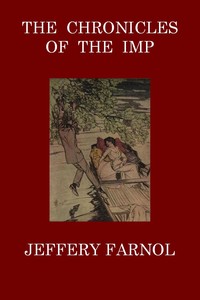
The source record for The Chronicles of the Imp: A Romance — Themes and Context measures this digital text at 44,969 words, 3 hr 16 min estimated reading time, and 7 detected text sections.
The text analysis averages about 16.7 words per sentence, while the detected sections provide another way to judge how the source is divided.
Project Gutenberg metadata also associates the work with “Humorous stories,” connecting these edition facts with the source record’s subject description.
Explore this collection
These alternatives are selected using recorded categories and estimated reading time.
About 213 minutes
Classic Romance
48,913 recorded words. 17 minutes difference from this book's estimate.
View Gutenberg source #69920About 221 minutes
Classic Romance
50,708 recorded words. 25 minutes difference from this book's estimate.
View Gutenberg source #54010About 150 minutes
Classic Romance
34,278 recorded words. 46 minutes difference from this book's estimate.
View Gutenberg source #45528Search stored excerpts and compare books → Choose by your preferences →
Choices use stored catalog measurements. Estimates vary with reading speed. A shared category is a catalog label, not a claim that two books have the same argument or literary quality.
Search reads excerpt text stored with this catalog and links to its associated Gutenberg record. The connection is stored in the site database; this tool does not recheck that every excerpt is word-for-word identical to that external record. Excerpt search does not cover every chapter and does not verify historical publication dates.
Catalog snapshot checked: 2026-09-26. Coverage: 89 public books, 89 available source excerpts.
Calculated from edition completeness, EPUB availability, text structure and catalogue metadata. Not a user rating.
Total of 100 points, scaled to a 2.5-5.0 range. Editions with an empty description or a missing EPUB file are not scored.
Public-domain source text
The source text is kept in the dedicated reader, separate from this catalogue record and its commentary.
The narrator of The Chronicles of the Imp introduces himself not by name but through a predicament: edging along a tree branch to reach a boat. This physical comedy sets the tone for a story that balances boyish mischief with romantic subplots. The early chapters establish a framing device where the Imp—Reginald—and his sister Dorothy draw Uncle Dick into their elaborate make-believe, from Indian war-paint to knightly quests. Farnol’s prose is leisurely, pausing for literary references (the Pickwick Papers, The Compleat Angler) and for observations of nature, such as a frog’s “gold-rimmed eyes.” The narrator’s self-deprecating asides and the children’s earnest dialogue create a world where adult concerns are gently filtered through a child’s perspective.
The opening excerpts reveal a narrator who is both participant and observer, often breaking the fourth wall with wry commentary. When he reads aloud from The Compleat Angler about impaling frogs, the frog itself reacts with a “hoarse croak” and escapes—a comic deflation of scholarly pretension. This self-aware humor extends to the children’s letters: Dorothy’s note from “Spotted Snaik” includes her own embellishment about “buckkit-fulls” of blood. Farnol uses these moments to show how literature (from Izaak Walton to Indian adventure books) filters into the children’s games, while the narrator’s gentle mockery keeps the tone light. Readers should watch for how the narrator’s digressions—on rivers, books, or frogs—mirror the Imp’s own imaginative leaps.
The Imp, Reginald, is never directly quoted in these excerpts, but his presence is felt through Dorothy’s reports and the letter he dictates. His rules for play are strict: Indians must say “Hist!” and war-paint is essential. Dorothy, acting as his emissary, explains that last time the paint caused “awfull’ anger.” This detail hints at a domestic order that the Imp’s schemes routinely disrupt. The narrator’s role as “Uncle Dick” places him between the children’s fantasy and adult authority. He plays along—addressing Dorothy as an Indian—but his amusement is evident. The excerpts suggest that the Imp’s adventures are not merely random; they follow a logic drawn from his books, and the adults’ willingness to participate is what makes the romance possible.
The second excerpt opens with a sun that “blazed down” on a fine August afternoon, with a breeze stirring leaves and the river whispering to reeds. This pastoral setting is more than backdrop; it invites the narrator to dream and to recall literary passages. The frog, the river, and the old book create a tableau of stillness before Dorothy’s arrival disrupts it. Farnol’s descriptions are sensory but unhurried, emphasizing the heat, the light, and the sound of water. The season—summer—suggests a time of freedom and play, fitting for the Imp’s escapades. Readers may note how the natural world is anthropomorphized (the river is “wise,” the frog “polite”), aligning with the children’s tendency to personify everything around them.
The subtitle “A Romance” signals a love story, but the excerpts show it unfolding indirectly. Uncle Dick and Dorothy share a warm, teasing rapport; her delivery of the Imp’s letter is a pretext for their conversation. The narrator’s attention to Dorothy—her “fluffy kitten,” her earnest explanations—suggests an affection that goes beyond uncle-niece banter. Meanwhile, the Imp’s games of knights and Indians create opportunities for the adults to interact. The episode titled “The Episode of the Indian’s Aunt” (partially visible) hints that a relative may become a plot device. Farnol embeds the romance within the children’s world, so that courtship progresses through shared laughter and invented rituals. Readers should expect the Imp’s schemes to nudge the adults together, even as he remains absorbed in his own adventures.
These excerpts offer a cross-section of Farnol’s method: a narrator who is both storyteller and character, children whose games have real consequences, and a romance that grows from everyday moments. The Imp himself remains a offstage presence, his voice filtered through letters and Dorothy’s reports. As you read, pay attention to how the narrator’s literary asides—his quotations, his reflections on rivers and frogs—echo the Imp’s own habit of turning life into story. The romance, when it comes, will likely be as much about the adults learning to play as about the children learning to grow up.
Reading about the Imp’s invented worlds brought back afternoons when my brother and I turned the garden into Sherwood Forest. That feeling—of a story wrapping itself around ordinary days—came again with The Best Man — Story, Setting & Ideas, though there the texture was quieter, more grown. It didn’t ask anything of me, just let me sit inside its mood awhile. The Best Man — Story, Setting & Ideas lingers like that, an echo rather than an adventure.
Create a short personal record of your experience with this book.