About 367 minutes
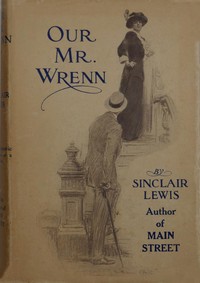
Our Mr. Wrenn: The Romantic Adventures of a Gentle Man — Story, Setting & Ideas
Classic Romance
84,247 recorded words. 2 minutes difference from this book's estimate.
View Gutenberg source #4961
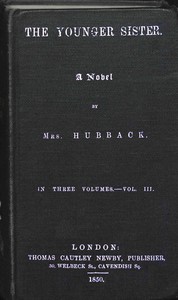
The catalog record for The Younger Sister: A Novel, Vol. III. — Background and Themes provides practical reading context through 84,778 words, 6 hr 9 min estimated reading time, and 21 detected text sections.
The text analysis averages about 24.8 words per sentence, while the detected sections provide another way to judge how the source is divided.
Project Gutenberg metadata also associates the work with “England -- Fiction,” connecting these edition facts with the source record’s subject description.
Explore this collection
These alternatives are selected using recorded categories and estimated reading time.
About 367 minutes
Classic Romance
84,247 recorded words. 2 minutes difference from this book's estimate.
View Gutenberg source #4961About 328 minutes
Classic Romance
75,412 recorded words. 41 minutes difference from this book's estimate.
View Gutenberg source #13396About 326 minutes
Classic Romance
74,859 recorded words. 43 minutes difference from this book's estimate.
View Gutenberg source #67979Search stored excerpts and compare books → Choose by your preferences →
Choices use stored catalog measurements. Estimates vary with reading speed. A shared category is a catalog label, not a claim that two books have the same argument or literary quality.
Search reads excerpt text stored with this catalog and links to its associated Gutenberg record. The connection is stored in the site database; this tool does not recheck that every excerpt is word-for-word identical to that external record. Excerpt search does not cover every chapter and does not verify historical publication dates.
Catalog snapshot checked: 2026-09-26. Coverage: 89 public books, 89 available source excerpts.
Calculated from edition completeness, EPUB availability, text structure and catalogue metadata. Not a user rating.
Total of 100 points, scaled to a 2.5-5.0 range. Editions with an empty description or a missing EPUB file are not scored.
Public-domain source text
The source text is kept in the dedicated reader, separate from this catalogue record and its commentary.
The third volume of The Younger Sister opens with a scene of restless anticipation: Margaret paces between windows, watching for her lover's curricle, then collapses onto a sofa in feigned faintness. The narrator's tone is lightly ironic, noting how she 'recovered as rapidly as she had appeared to lose her strength' when his step is heard. This pattern of heightened emotion undercut by mundane detail recurs throughout the excerpts, as when Margaret smooths the nap of his hat and stretches his driving gloves—gestures that signal devotion but also a kind of domestic management. The prose moves between interior agitation and external bustle, with the arrival of a carriage bringing 'twenty heads to the neighbouring windows.' Such shifts in pace, from anxious waiting to brisk action, shape the volume's narrative rhythm.
The opening chapter establishes a tempo of nervous energy. Margaret's 'incessant walking' and sudden conviction of disaster create a pulse of alarm, only to be punctured by the lover's cool handshake and his immediate turn to compliment other ladies. The narrative lingers on small actions—smoothing hat nap, stretching gloves—that slow time and amplify emotional distance. Later, when Emma is left alone with Mr. Morgan, the pace drops to a quiet tête-à-tête, contrasting with the earlier bustle. These fluctuations in speed mirror the characters' uneven emotional states: Margaret's theatrical swoon gives way to practical busyness, while Emma's stillness suggests a different kind of tension. The volume uses such rhythmic changes to underscore social rituals and unspoken feelings.
Dialogue in these excerpts often carries subtext through indirect or reported speech. When Margaret exclaims 'support me, my dear sisters—support me in this trying hour,' the melodramatic phrasing is undercut by the narrator's detached report. Later, Lady Gordon's enthusiastic proposal to stage Comus is met with Emma's cautious demurral: 'I am certain I could not act before an audience.' The exchange reveals character through tone—Lady Gordon's animation versus Emma's self-deprecation—without explicit commentary. The narrator also uses free indirect style, as when Emma's thoughts 'wander down along each sunny glade' while Lady Gordon reflects on 'mundane' interests. This layering of voices creates a nuanced social texture, where what is left unsaid often matters more than direct statements.
The forest setting in the later excerpt is rendered with sensory detail: 'ancient trees, and groups of deer, sunshine and flickering shadows, deep pools sleeping under precipitous banks.' This picturesque description shifts the narrative pace from domestic hurry to contemplative stillness. Emma's comparison to 'the scenery of Comus' introduces a theatrical frame that Lady Gordon seizes upon, proposing an outdoor performance. The allusion to Milton's masque is not merely decorative; it hints at themes of enchantment and disguise that may resonate with the novel's courtship plots. The contrast between Emma's quiet pleasure in nature and Lady Gordon's worldly schemes—'difficulties to overcome give one spirits'—further distinguishes their characters through their responses to the same landscape.
Readers attentive to shifts in tempo will notice how Mrs. Hubback uses pacing to signal emotional undercurrents: hurried arrivals and departures, lingering descriptions, and sudden silences. The dialogue rewards close attention to what is implied rather than stated, especially in exchanges where characters talk past each other. The volume's scenic passages, meanwhile, offer respite from social maneuvering while subtly advancing thematic concerns. These elements together create a narrative that moves between the mundane and the theatrical, inviting the reader to watch for the small gestures and verbal cues that reveal hidden motives.
The way Vol. III lingers in that quiet space between what’s said aloud and what’s true—it reminded me of a book I once carried for days afterward. The Moth Decides: A Novel — Reading Notes holds a similar hush, where characters seem to pause mid-thought, and you’re left with that same tender unease, long after the page settles.
Create a short personal record of your experience with this book.