About 458 minutes
The Lily of the Valley — Background and Themes
Family Stories
105,294 recorded words. 16 minutes difference from this book's estimate.
View Gutenberg source #1569
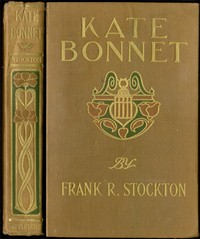
The catalog record for Kate Bonnet: The Romance of a Pirate's Daughter — Edition Insights provides practical reading context through 101,596 words, 7 hr 22 min estimated reading time, and 12 detected text sections.
The text analysis averages about 20.7 words per sentence, while the detected sections provide another way to judge how the source is divided.
Project Gutenberg metadata also associates the work with “Love stories,” connecting these edition facts with the source record’s subject description.
Explore this collection
These alternatives are selected using recorded categories and estimated reading time.
About 458 minutes
Family Stories
105,294 recorded words. 16 minutes difference from this book's estimate.
View Gutenberg source #1569About 515 minutes
Family Stories
118,421 recorded words. 73 minutes difference from this book's estimate.
View Gutenberg source #3404About 572 minutes
Family Stories
131,504 recorded words. 130 minutes difference from this book's estimate.
View Gutenberg source #1342Search stored excerpts and compare books → Choose by your preferences →
Choices use stored catalog measurements. Estimates vary with reading speed. A shared category is a catalog label, not a claim that two books have the same argument or literary quality.
Search reads excerpt text stored with this catalog and links to its associated Gutenberg record. The connection is stored in the site database; this tool does not recheck that every excerpt is word-for-word identical to that external record. Excerpt search does not cover every chapter and does not verify historical publication dates.
Catalog snapshot checked: 2026-09-26. Coverage: 89 public books, 89 available source excerpts.
Calculated from edition completeness, EPUB availability, text structure and catalogue metadata. Not a user rating.
Total of 100 points, scaled to a 2.5-5.0 range. Editions with an empty description or a missing EPUB file are not scored.
Public-domain source text
The source text is kept in the dedicated reader, separate from this catalogue record and its commentary.
Stockton opens Kate Bonnet with a deliberate anti-climax: the heroine, fishing without a basket, seems indifferent to catching anything. This small detail sets the tone for a novel that often subverts pirate-story expectations. The narrative voice is wry, occasionally slipping into direct commentary on character motives—as when Mr. Delaplaine privately wishes Bonnet dead, a thought the narrator calls “wicked” but does not condemn. Stockton’s diction favors precise, understated verbs (“walked slowly,” “carried a fishing-rod”) over swashbuckling flourishes, grounding the romance in everyday actions.
Stockton’s word choices consistently deflate the heroic register typical of pirate fiction. Major Bonnet is introduced not through his crimes but through his daughter’s mundane errand. The narrator refers to piracy as “wrongdoings of others,” a phrase that minimizes its violence. When Kate learns her father has become an “accountant and commission agent,” the absurdity of a pirate turned clerk is played straight, without exclamation. This flatness is deliberate: Stockton treats piracy as a social inconvenience rather than a moral abyss. The effect is a story where the most dramatic events—a pirate fight, a rescue—are reported secondhand or in summary, while the emotional weight falls on letters, waiting, and domestic arrangements.
Stockton’s dialogue reveals character through indirectness and subtext. Kate’s speeches are full of exclamation and urgency (“we must fly, we must not wait!”), yet her actions remain measured. In contrast, Dame Charter’s thoughts are rendered in free indirect style: “If he had never been born… how much better it would have been; but then the thought would come crowding in, how bad that would have been for Dickory.” This layered interiority gives even minor characters conflicting motives. The Governor’s dialogue is courteous but evasive, offering “assurances” without action. Stockton rarely lets characters say exactly what they mean; instead, their words circle around desire, duty, and fear, creating a texture of polite evasion that mirrors the novel’s central tension between respectability and outlawry.
The novel’s structure prioritizes waiting over action. Chapter titles like “An Unsuccessful Errand” and “Bad Weather” signal that plot advances are often deferred. The excerpts show long passages of deliberation: Kate and her uncle discuss how to reach Belize, but the journey itself is compressed into a single sentence (“Before sunset three passages were engaged”). Stockton lingers on the emotional aftermath of news—Kate sitting “long into the night, her letter in her hand”—rather than on the voyage. This rhythm creates a sense of suspended time, where characters are perpetually in between events. The pirate fight promised on the frontispiece is framed as a memory (“Oh, Kate!… you should have seen”), already past. Stockton’s interest lies not in the fight but in how it is retold and received.
Stockton uses physical objects to anchor emotional states. The fishing rod without a basket, the letter that contains both a love declaration and news of Bonnet’s reform, the sloop sailing “in ballast” (empty of cargo)—these items carry symbolic weight without being heavy-handed. Kate’s letter is described as a “sunburst” that “lighted up the souls” of the household, yet its contents are partly kept secret. The contrast between what is read aloud (the practical news) and what is read silently (the love confession) mirrors the novel’s split between public duty and private feeling. Even the title’s “Romance” is qualified by the possessive “of a Pirate’s Daughter,” suggesting that Kate’s identity is defined by a relationship she cannot control. Objects in Stockton’s world are never merely props; they are evidence of the characters’ constrained choices.
Readers attentive to Stockton’s narrative voice will notice how often he undercuts his own drama with a quiet joke or a shift in register. The novel rewards those who read for tone as much as for plot. Pay particular attention to what characters do not say, and to the moments when the narrator steps back to let a gesture or an object speak. The romance here is as much about the shape of a sentence as about the fate of its characters.
There’s a certain kinship in how Kate Bonnet’s story quietly measures her heart against a pirate’s world, and I find that same tender weighing of love and loyalty in Old Love Stories Retold — Story, Setting & Ideas. Both seem to understand that affection often whispers where adventure shouts. Such gentle company for a quiet evening.
Use these questions to collect your thoughts before moving on.