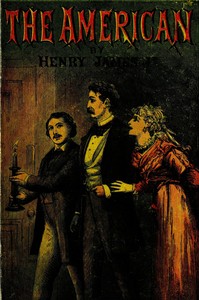
About 611 minutes
The American — Reading Companion
Family Stories
140,340 recorded words. 39 minutes difference from this book's estimate.
View Gutenberg source #177
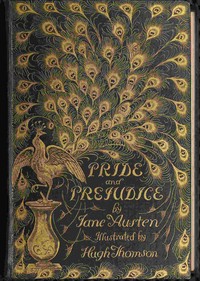
The source record for Pride and Prejudice — A Closer Reading measures this digital text at 131,504 words, 9 hr 32 min estimated reading time, and 15 detected text sections.
The text analysis averages about 18.9 words per sentence, while the detected sections provide another way to judge how the source is divided.
Project Gutenberg metadata also associates the work with “England -- Fiction,” connecting these edition facts with the source record’s subject description.
Explore this collection
These alternatives are selected using recorded categories and estimated reading time.
About 611 minutes
Family Stories
140,340 recorded words. 39 minutes difference from this book's estimate.
View Gutenberg source #177About 515 minutes
Family Stories
118,421 recorded words. 57 minutes difference from this book's estimate.
View Gutenberg source #3404About 458 minutes
Family Stories
105,294 recorded words. 114 minutes difference from this book's estimate.
View Gutenberg source #1569Search stored excerpts and compare books → Choose by your preferences →
Choices use stored catalog measurements. Estimates vary with reading speed. A shared category is a catalog label, not a claim that two books have the same argument or literary quality.
Search reads excerpt text stored with this catalog and links to its associated Gutenberg record. The connection is stored in the site database; this tool does not recheck that every excerpt is word-for-word identical to that external record. Excerpt search does not cover every chapter and does not verify historical publication dates.
Catalog snapshot checked: 2026-09-26. Coverage: 89 public books, 89 available source excerpts.
Calculated from edition completeness, EPUB availability, text structure and catalogue metadata. Not a user rating.
Total of 100 points, scaled to a 2.5-5.0 range. Editions with an empty description or a missing EPUB file are not scored.
Public-domain source text
The source text is kept in the dedicated reader, separate from this catalogue record and its commentary.
The novel opens with a famously ironic declaration: “It is a truth universally acknowledged, that a single man in possession of a good fortune, must be in want of a wife.” This sentence immediately signals a world where marriage is a financial and social transaction, and where the narrator’s wit undercuts the very premise. The first chapter introduces the Bennet family through brisk dialogue, with Mr. Bennet’s dry humor contrasting his wife’s eager matchmaking. The arrival of Mr. Bingley sets the plot in motion, but the opening’s true focus is the satirical exposure of societal attitudes toward wealth and matrimony.
The first chapter establishes a tone of detached irony. The famous opening line is immediately undercut by the dialogue between Mr. and Mrs. Bennet, where she chatters about Netherfield Park and he teases her with pretended indifference. The narrator’s voice is cool and amused, observing the “business of [Mrs. Bennet’s] life” as getting her daughters married. This satirical lens persists throughout the early chapters, as characters like Mr. Collins and Lady Catherine de Bourgh are introduced with similar mockery. The reader is positioned to see through social pretensions from the start.
The excerpt from Chapter 34 contains one of the novel’s most dramatic scenes: Mr. Darcy’s first proposal. Elizabeth’s refusal is vehement and articulate, listing her grievances: his interference with Jane and Bingley, his treatment of Wickham, and his “arrogance, conceit, and selfish disdain.” Darcy’s response reveals his own pride, as he admits to struggling with her “inferior connections.” The exchange is a collision of two strong wills, each convinced of their own rectitude. The language is formal yet charged, with Elizabeth’s anger and Darcy’s mortification palpable. This scene is the emotional climax of the first half, setting the stage for their subsequent growth.
Austen’s dialogue is the primary vehicle for character and conflict. In the proposal scene, every speech advances the argument and reveals inner states: Elizabeth’s “immovable dislike” and Darcy’s “abhorrence” of disguise. The structure of the novel alternates between social gatherings and private conversations, allowing misunderstandings to fester and then be clarified. The narrator rarely editorializes directly, instead letting characters expose themselves through their words. This technique creates a sense of dramatic irony, as readers perceive gaps between what characters say and what they mean.
Letters play a crucial role in the plot, though the excerpts only hint at this. Elizabeth’s reliance on Wickham’s account, which she later learns is false, underscores the theme of misjudgment. The proposal scene references “the recital which I received many months ago from Mr. Wickham,” showing how secondhand information shapes her opinion. Similarly, Darcy’s letter (not included in the excerpts) is a turning point that forces Elizabeth to reconsider. These epistolary moments are structural devices that advance the narrative and deepen character development, demonstrating Austen’s skill in embedding key revelations within personal correspondence.
As you read, pay attention to how Austen uses free indirect discourse—blending the narrator’s voice with a character’s thoughts—to create intimacy and irony. The early chapters establish a world of social performance, while the later excerpts show characters beginning to see beyond their own prejudices. Notice how the proposal scene is not an end but a beginning of self-awareness for both Elizabeth and Darcy.
Sometimes I think of Elizabeth’s sharp, wounded “you were mistaken” speech, and how it lingers long after the page. Pride and Prejudice — A Closer Reading caught that ache so well. It reminded me of another journey, quieter but just as searching, in The American — Reading Companion. Two books, one old feeling: learning you barely knew your own heart.
Your answers remain private and are stored only in this browser.