About 572 minutes
Pride and Prejudice — A Closer Reading
Family Stories
131,504 recorded words. 39 minutes difference from this book's estimate.
View Gutenberg source #1342
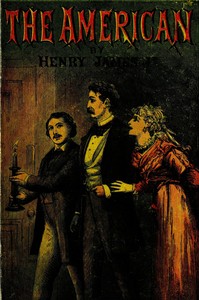
The catalog record for The American — Reading Companion provides practical reading context through 140,340 words, 10 hr 11 min estimated reading time, and 27 detected text sections.
The text analysis averages about 14.4 words per sentence, while the detected sections provide another way to judge how the source is divided.
Project Gutenberg metadata also associates the work with “Psychological fiction,” connecting these edition facts with the source record’s subject description.
Explore this collection
These alternatives are selected using recorded categories and estimated reading time.
About 572 minutes
Family Stories
131,504 recorded words. 39 minutes difference from this book's estimate.
View Gutenberg source #1342About 515 minutes
Family Stories
118,421 recorded words. 96 minutes difference from this book's estimate.
View Gutenberg source #3404About 458 minutes
Family Stories
105,294 recorded words. 153 minutes difference from this book's estimate.
View Gutenberg source #1569Search stored excerpts and compare books → Choose by your preferences →
Choices use stored catalog measurements. Estimates vary with reading speed. A shared category is a catalog label, not a claim that two books have the same argument or literary quality.
Search reads excerpt text stored with this catalog and links to its associated Gutenberg record. The connection is stored in the site database; this tool does not recheck that every excerpt is word-for-word identical to that external record. Excerpt search does not cover every chapter and does not verify historical publication dates.
Catalog snapshot checked: 2026-09-26. Coverage: 89 public books, 89 available source excerpts.
Calculated from edition completeness, EPUB availability, text structure and catalogue metadata. Not a user rating.
Total of 100 points, scaled to a 2.5-5.0 range. Editions with an empty description or a missing EPUB file are not scored.
Public-domain source text
The source text is kept in the dedicated reader, separate from this catalogue record and its commentary.
The novel begins with Christopher Newman lounging on a divan in the Louvre, having exhausted himself by dutifully checking every asterisked painting in his Baedeker. James immediately establishes Newman as a physically robust American—"long, lean, and muscular"—whose approach to art is systematic yet self-aware: he admits to admiring copies more than originals. The opening paragraph introduces a key tension: Newman's commercial background ("he had often sat up all night over a bristling bundle of accounts") collides with the aesthetic demands of Paris, leaving him with an "æsthetic headache." This early scene frames the novel's central dynamic—a pragmatic American navigating a society that prizes nuance and pedigree over efficiency.
The Louvre scene does more than establish setting; it reveals Newman's character through his relationship with art. James notes that Newman "had looked out all the pictures to which an asterisk was affixed" in his guidebook, treating the museum as a checklist to be conquered. Yet his attention drifts to the copyists—"innumerable young women in irreproachable toilets"—and he "often admired the copy much more than the original." This preference for reproduction over authenticity hints at Newman's broader approach to European culture: he values what can be acquired and displayed, not the intangible prestige of originals. The narrator's wry observation that Raphael and Titian were "a new kind of arithmetic" underscores Newman's tendency to translate aesthetic experience into familiar terms of calculation and effort.
Later in the excerpts, Newman announces his engagement to Claire de Cintré by telegraphing the news to New York, St. Louis, and San Francisco. This act of rapid, public communication contrasts sharply with the Bellegarde family's preference for discretion. When Newman displays the eight congratulatory telegrams he receives to the marquise, James calls it "a slightly malicious stroke." The telegraph becomes a symbol of Newman's American efficiency and his desire for open acknowledgment—a direct challenge to the aristocratic code of quiet negotiation. Claire, however, "liked them, and, most of them being of a humorous cast, laughed at them immoderately." Her amusement suggests a willingness to bridge the cultural gap, even as her mother's disapproval lingers.
Despite the engagement, tension simmers beneath the surface. Newman presses Claire about her mother's displeasure, and she admits, "I do 'mind it,' as you say. You will call it superstitious." Newman's response—"That will depend upon how much you let it bother me"—reveals his pragmatic, almost transactional view of emotional obstacles. Claire's brother Valentin adds a darker note: he declares he "adore[s] someone I can't marry," hinting at constraints that may apply to Claire as well. The family's resistance is never fully explained in these excerpts, but their reluctance to embrace Newman's "triumph" suggests that the marriage threatens more than mere social convention. James leaves the reader to wonder what secrets or obligations bind the Bellegardes.
The excerpts provide only fragments of the plot's middle and later stages. We see Newman confident and victorious, yet the family's coldness and Valentin's cryptic remark point to future complications. James's method is to offer telling details—the telegraphs, the Louvre headache, the marquise's impertinent question "Have you many?"—without resolving their implications. Readers should attend to these small gestures and verbal exchanges, as they often carry more weight than overt declarations. The novel's psychological depth emerges not from dramatic action but from the spaces between what characters say and what they withhold. Newman's certainty may prove as fragile as the copies he admired in the museum.
As you read, notice how James uses objects and rituals—guidebooks, telegrams, visits—to measure the distance between Newman's world and that of the Bellegardes. The novel rewards attention to indirect communication: a raised eyebrow, a delayed response, a seemingly trivial remark. The excerpts offer only a partial view, but they establish a pattern of cultural collision that will likely intensify. Trust the narrator's irony, and watch for moments when Newman's confidence meets the silent resistance of a society that values what cannot be bought.
I remember sitting in a drafty hotel lobby, flipping through The American, feeling Newman's blunt honesty bump against Parisian politeness like a stone against glass. It reminded me of another quiet book, where young hearts fumbled through expectation and truth — April Hopes — A Reader’s Guide held that same tender ache. Both left me lingering on what we say, and what we don’t.
Save your reaction, strongest insight, and memorable passage.