About 441 minutes
A Bachelor Husband — Text and Context
Marriage Society
101,206 recorded words. 0 minutes difference from this book's estimate.
View Gutenberg source #42085
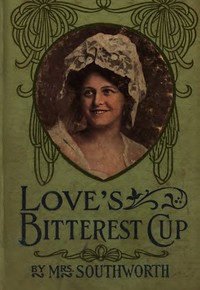
Love's bitterest cup — Inside the Classic can be approached with a clearer sense of reading commitment from its source measurements: 101,290 words, 7 hr 21 min estimated reading time, and 51 detected text sections.
The text analysis averages about 15.7 words per sentence, while the detected sections provide another way to judge how the source is divided.
Project Gutenberg metadata also associates the work with “United States -- Social life and customs -- 19th century -- Fiction,” connecting these edition facts with the source record’s subject description.
Explore this collection
These alternatives are selected using recorded categories and estimated reading time.
About 441 minutes
Marriage Society
101,206 recorded words. 0 minutes difference from this book's estimate.
View Gutenberg source #42085About 481 minutes
Marriage Society
110,465 recorded words. 40 minutes difference from this book's estimate.
View Gutenberg source #67123About 384 minutes
Marriage Society
88,203 recorded words. 57 minutes difference from this book's estimate.
View Gutenberg source #1263Search stored excerpts and compare books → Choose by your preferences →
Choices use stored catalog measurements. Estimates vary with reading speed. A shared category is a catalog label, not a claim that two books have the same argument or literary quality.
Search reads excerpt text stored with this catalog and links to its associated Gutenberg record. The connection is stored in the site database; this tool does not recheck that every excerpt is word-for-word identical to that external record. Excerpt search does not cover every chapter and does not verify historical publication dates.
Catalog snapshot checked: 2026-09-26. Coverage: 89 public books, 89 available source excerpts.
Calculated from edition completeness, EPUB availability, text structure and catalogue metadata. Not a user rating.
Total of 100 points, scaled to a 2.5-5.0 range. Editions with an empty description or a missing EPUB file are not scored.
Public-domain source text
The source text is kept in the dedicated reader, separate from this catalogue record and its commentary.
The novel begins not with a crisis but with a wedding frolic at Forest Rest, where the local community seizes any excuse for merry-making during the slack winter season. The newly married couple wishes for quiet, but their neighbors insist on celebration, establishing a pattern of social pressure overriding personal desire. Southworth’s narrator adopts a knowing, slightly ironic tone, referring to the marriage as a “fair excuse for general outbreak into gayety.” This opening suggests that the story will balance domestic intimacy with the demands of a watchful, opinionated community.
The excerpted dialogue between Wynnette and Rosemary reveals Southworth’s skill in using conversational sparring to advance character and theme. Wynnette bluntly questions Roland Bayard’s origins—calling him “nobody’s son”—while Rosemary defends him with emotional appeals to his “princely lineage” and refinement. The exchange is rapid, with interruptions and exclamations (“Oh, Wynnette!”) that mimic natural speech. Wynnette’s self-correction—“I am a little catamount”—adds a layer of self-awareness, and the narrator notes that this was the first and last time the subject was mentioned between them, hinting at unresolved tensions. The passage demonstrates how Southworth uses direct speech to dramatize class anxiety and personal loyalty.
In Chapter XXVII, the tone shifts from intimate debate to collective inquiry. Le arrives with “overwhelming evidence” about a marriage, and Mrs. Anglesea’s indignant protest—“if ever I had thought as any of you misdoubted as I was Anglesea’s lawful wedded wife”—shows how legal proof intersects with personal honor. Mr. Force’s soothing response acknowledges that “captious people will contest things that they cannot doubt,” revealing a pragmatic awareness of social skepticism. The scene is crowded with greetings, embraces, and overlapping questions, creating a sense of bustle. Southworth contrasts this communal energy with the earlier private quarrel, suggesting that the novel moves between personal doubt and public verification.
Southworth’s narrative pace varies markedly between chapters. The opening wedding frolic unfolds with leisurely description of winter festivities, while later scenes compress time through reported action—Le’s journey to St. Sebastian is summarized, and the discovery of Joe Mullins is relayed in a few lines. The author often uses incidental details to ground the story: the “jewelry line of business,” the reference to “Wild Cats’ Gulch,” and the specific name “Carrier Pigeon” for the wreck that brought Roland ashore. These details lend texture without slowing the plot. Readers should attend to how Southworth balances set pieces of dialogue with swift narrative transitions, as this rhythm shapes the novel’s emotional impact.
Southworth’s prose rewards attention to its shifts in register—from the colloquial energy of Wynnette’s outbursts to the measured tones of Mr. Force’s legal reassurances. The excerpts suggest a novel that intertwines romantic anxiety with the mechanics of proof and reputation. As you read, note how the narrator’s voice modulates between ironic commentary and straightforward report, and how scenes of social festivity give way to moments of private tension. This interplay of public and private spheres is central to the work’s exploration of marriage and identity.
Winter weddings always make me think of my grandmother’s copy of Love’s Bitterest Cup, the way she’d frown over lineage debates while snow piled on the sill. That unease about hidden origins returned lately when reading Object: matrimony — Story, Setting & Ideas—both feel like rooms where silence holds more than talk. I sat with that feeling awhile.
A brief reflection can help important ideas stay with you longer.