About 127 minutes
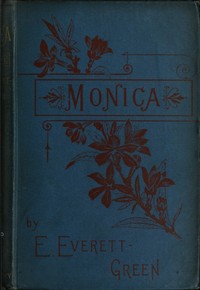
Monica: A Novel, Volume 3 (of 3) — Background and Themes
Marriage Society
29,174 recorded words. 78 minutes difference from this book's estimate.
View Gutenberg source #54942

The source record for Object: matrimony — Story, Setting & Ideas measures this digital text at 11,062 words, 49 min estimated reading time, and 2 detected text sections.
The text analysis averages about 15.3 words per sentence, while the detected sections provide another way to judge how the source is divided.
Project Gutenberg metadata also associates the work with “New York (N.Y.) -- Fiction,” connecting these edition facts with the source record’s subject description.
Explore this collection
These alternatives are selected using recorded categories and estimated reading time.
About 127 minutes
Marriage Society
29,174 recorded words. 78 minutes difference from this book's estimate.
View Gutenberg source #54942About 135 minutes
Marriage Society
30,957 recorded words. 86 minutes difference from this book's estimate.
View Gutenberg source #54941About 140 minutes
Marriage Society
32,076 recorded words. 91 minutes difference from this book's estimate.
View Gutenberg source #54940Search stored excerpts and compare books → Choose by your preferences →
Choices use stored catalog measurements. Estimates vary with reading speed. A shared category is a catalog label, not a claim that two books have the same argument or literary quality.
Search reads excerpt text stored with this catalog and links to its associated Gutenberg record. The connection is stored in the site database; this tool does not recheck that every excerpt is word-for-word identical to that external record. Excerpt search does not cover every chapter and does not verify historical publication dates.
Catalog snapshot checked: 2026-09-26. Coverage: 89 public books, 89 available source excerpts.
Calculated from edition completeness, EPUB availability, text structure and catalogue metadata. Not a user rating.
Total of 100 points, scaled to a 2.5-5.0 range. Editions with an empty description or a missing EPUB file are not scored.
Public-domain source text
The source text is kept in the dedicated reader, separate from this catalogue record and its commentary.
Montague Glass opens Object: Matrimony not with a wedding but with a financial crisis. Philip Margolius, a real-estate owner burdened with four vacant flat-houses, laments to his attorney Henry D. Feldman: “if a feller’s in the real-estate business … and it comes bad times, he can’t not only sell his houses, but he couldn’t give ’em away yet.” The dialogue immediately establishes a world where property, mortgages, and deficiency judgments dominate conversation—and where marriage, when it appears, is treated as a strategic asset rather than a romantic event.
The excerpts reveal a novel built on rapid, idiomatic speech. Characters interrupt, correct, and bargain with each other using a distinctive Yiddish-influenced English. Feldman’s “professional ethics” are noted only to be set aside when a clever legal loophole emerges. Readers should attend to how Glass uses dialogue to convey character, plot, and social milieu simultaneously.
From the first line—“DID YOU EVER SUFFER FROM STUMMICK TROUBLE?”—Glass signals that language itself is a subject. Philip Margolius speaks in a transcribed dialect that mixes Yiddish syntax with New York business slang: “futures don’t cut no ice,” “a dead proposition,” “a regular Skylark.” His speech is not merely decorative; it conveys his social position, his emotional state, and his relentless focus on practical outcomes.
Feldman, the attorney, uses a more standard English but shifts into colloquialisms when excited: “By jiminy!” and “you’ve got the old man by the whiskers!” The contrast between the two registers highlights the gap between legal theory and street-level survival. Glass never explains these terms; he trusts the reader to infer meaning from context. A first-time reader should listen to the rhythm of the dialogue—the interruptions, the repeated phrases (“Believe me, Mr. Feldman”), and the way characters talk past each other before arriving at a shared understanding.
The title’s colon is a pun: “Object: matrimony” could be a heading in a legal document or a personal ad. The excerpts show that marriage is indeed treated as an object—a tool to manipulate property law. Philip reveals he secretly married Birdie Goldblatt, the daughter of his creditor, but she still lives at home. Feldman immediately sees the legal advantage: Birdie’s “inchoate right of dower” means the foreclosure sale can be stopped because she was not made a party to the suit.
Philip misunderstands Feldman’s legal jargon (“My Birdie is a neat dresser”), but he grasps the practical benefit. The marriage is kept secret from the father, adding a layer of farce to the financial drama. Readers should note how Glass intertwines the romantic plot with the business plot: the same conversation that reveals the marriage also devises the scheme to delay foreclosure. The personal and the commercial are inseparable.
Feldman is introduced as a “conscientious practitioner” who never does anything that might bring him before the grievance committee—yet he is also “a power in the Democratic organization and right in line for a Supreme Court judgeship.” The narrator’s tone is wryly observational: “it behooved him to be careful if not ethical.” When Philip’s situation becomes desperate, Feldman throws ethics aside and devises a scheme that exploits a legal technicality.
The plan hinges on the fact that Philip and Birdie were married by a justice of the peace in New Jersey without a city license, making it difficult for the creditor to identify the wife. Feldman’s advice—“Just tell them you’re married, and let them find out your wife’s name for themselves”—is presented as clever rather than dishonest. Glass does not moralize; he lets the characters’ actions speak. A reader might consider whether the novel endorses this pragmatism or merely reports it.
The excerpts are structured around deadlines. The mortgages fall due in ten days; later, the foreclosure sale begins in three-quarters of an hour. This creates a sense of urgency that drives the dialogue forward. Philip’s repeated refrain—“we got to act quick”—is not just a character trait but a structural device. The novel’s short length (about 11,000 words) suggests that this pace is sustained throughout.
Glass also uses repetition for comic and dramatic effect. Philip tells Feldman he “used hours and hours of the best salesmanship” on Goldblatt; later, he insists he “wouldn’t know nothing about this here sale to-day” if not for Birdie. These echoes reinforce the characters’ fixations. First-time readers should note how the plot unfolds almost entirely through conversation, with minimal narration or description. The setting—New York real estate offices and courtrooms—is implied rather than depicted.
Object: Matrimony rewards attention to its dialogue’s cadence and its characters’ shifting alliances. Glass does not explain the legal terms or the dialect; he immerses the reader in a world where every statement is a negotiation. As you read, track how Philip’s desperation modulates into cunning, and how Feldman’s professional caution gives way to creative scheming. The novel’s brevity means that every exchange carries weight—and that the line between business and marriage is drawn, then redrawn, with each new revelation.
I kept thinking about Philip in that old novel, the quiet desperation of holding everything together while it crumbles. It reminded me of how Show Boat lingered, that same ache of lives carried along by forces bigger than them. Some stories just stay with you, like a song you can’t quite place. Show Boat — Context and Discussion has that same tender weight.
Your answers remain private and are stored only in this browser.