About 734 minutes
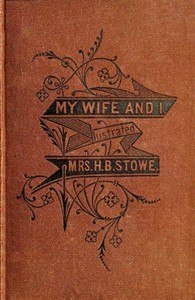
My Wife and I; Or, Harry Henderson's History — A Closer Reading
Marriage Society
168,817 recorded words. 83 minutes difference from this book's estimate.
View Gutenberg source #47874
The catalog record for The Three Fates — Context and Discussion provides practical reading context through 149,674 words, 10 hr 51 min estimated reading time, and 30 detected text sections.
The text analysis averages about 17.1 words per sentence, while the detected sections provide another way to judge how the source is divided.
Project Gutenberg metadata also associates the work with “New York (N.Y.) -- Fiction,” connecting these edition facts with the source record’s subject description.
Explore this collection
These alternatives are selected using recorded categories and estimated reading time.
About 734 minutes
Marriage Society
168,817 recorded words. 83 minutes difference from this book's estimate.
View Gutenberg source #47874About 481 minutes
Marriage Society
110,465 recorded words. 170 minutes difference from this book's estimate.
View Gutenberg source #67123About 441 minutes
Marriage Society
101,206 recorded words. 210 minutes difference from this book's estimate.
View Gutenberg source #42085Search stored excerpts and compare books → Choose by your preferences →
Choices use stored catalog measurements. Estimates vary with reading speed. A shared category is a catalog label, not a claim that two books have the same argument or literary quality.
Search reads excerpt text stored with this catalog and links to its associated Gutenberg record. The connection is stored in the site database; this tool does not recheck that every excerpt is word-for-word identical to that external record. Excerpt search does not cover every chapter and does not verify historical publication dates.
Catalog snapshot checked: 2026-09-26. Coverage: 89 public books, 89 available source excerpts.
Calculated from edition completeness, EPUB availability, text structure and catalogue metadata. Not a user rating.
Total of 100 points, scaled to a 2.5-5.0 range. Editions with an empty description or a missing EPUB file are not scored.
Public-domain source text
The source text is kept in the dedicated reader, separate from this catalogue record and its commentary.
The novel opens not with a marriage proposal or a ballroom scene but with a father's disappointment: Jonah Wood is 'bitterly disappointed in his son' because George lacks 'business instincts.' This domestic judgment immediately establishes the central tension between inherited expectation and individual vocation. The narrative voice, precise and slightly ironic, tracks George's struggle to write while his father measures worth in dollars. The blank page that George stares at 'hour after hour' becomes a recurring emblem of creative paralysis, set against the relentless machinery of New York finance.
Crawford builds his scenes around enclosed spaces that mirror his characters' psychological states. The Wood family home, the lawyer's office, Totty's drawing room—each interior is described with attention to furniture, light, and atmosphere. George's writing room is a 'aching void' where he 'turned, and twisted, and tormented every idea.' The physical confinement of these rooms contrasts with the open movement of money and gossip through the city. Totty's house, where she 'did her best to attract him,' becomes a stage for manipulation, its domestic comfort masking strategic calculation. The novel's structure moves between these interiors, each one a pressure chamber for the characters' ambitions and resentments.
A pattern of suspended action recurs throughout the excerpts. Jonah Wood waits twenty-five years for George to show business instincts. George waits through 'hour after hour, day after day' for inspiration. Totty waits in town during the heat, offering no explanation for her motives. This waiting is not passive but charged with suppressed intention. Crawford punctuates these pauses with sudden movements: a will is opened, a report is spread, a character 'renounces' an acquaintance. The narrative rhythm alternates between static interior scenes and abrupt shifts in social position, mirroring the volatility of the financial markets that shadow the plot.
Physical objects carry disproportionate narrative weight. The will, with its 'seal' and 'strong room,' is a document that Totty considers tampering with using a 'hot knife.' The blank sheet of paper that George pushes back 'sometimes as white as when he had taken it' becomes a symbol of failed production. Even Tom Craik's health is managed through objects: his food is 'weighed,' his clothing prescribed, his journeys made in 'his own car.' These details ground abstract conflicts—inheritance, creativity, control—in tangible things. Crawford's prose lingers on the material texture of upper-class life, using objects to reveal character and motive without explicit commentary.
The social geography of the novel is defined by movement between households. Totty's house is a neutral ground where George maintains 'old friendship with Sherry Trimm' while remaining ignorant of Totty's machinations. The narrative tracks characters' entrances and exits with the precision of a stage direction. Totty's loss of interest in Tom Craik's movements—'she seemed to have lost her interest in his movements and doings'—signals a realignment of loyalties. These shifts are never announced; they emerge through small changes in behavior and setting. The reader must attend to who visits whom, who stays late, who leaves early, to trace the undercurrents of power and desire.
Crawford infuses his prose with the vocabulary of commerce, even in non-financial contexts. Jonah Wood's moral rectitude is described as 'above all doubt,' but his forgiveness is a transaction he 'honestly meant to do.' Totty considers 'making great personal sacrifices' to escape a situation. George's writing is framed as 'fruitless contest' and 'duty.' This economic language permeates personal relationships, suggesting that in this world, every interaction carries a cost. The novel's structure—alternating between business dealings and domestic scenes—reinforces this fusion of spheres. Money is never merely background; it is the medium through which characters understand themselves and each other.
Readers attentive to Crawford's use of setting and recurring images will find a novel that operates as much through its spaces and objects as through its dialogue. The blank page, the sealed will, the weighed food—these details accumulate into a portrait of a society where everything is measured. The movement between rooms and houses is never incidental; it charts the shifting alliances and unspoken calculations that drive the story. Approach this novel as a study in the physics of social life, where every action has a visible consequence and every object carries a hidden value.
That blank page in The Three Fates—the way a room can feel emptier than it is, when the accounts don’t add up—took me back to sitting in my grandmother’s parlor, watching her worry over a ledger. His fortunate Grace — Context and Discussion stirred the same quiet ache, that sense of grace hemmed in by unspoken debts.
Use these questions to collect your thoughts before moving on.