About 135 minutes
Monica: A Novel, Volume 2 (of 3) — Story, Setting & Ideas
Marriage Society
30,957 recorded words. 5 minutes difference from this book's estimate.
View Gutenberg source #54941
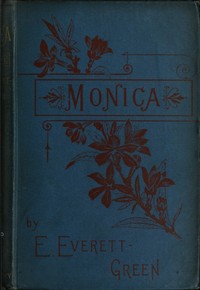
Before opening Monica: A Novel, Volume 1 (of 3) — Story, Setting & Ideas, the edition data offers a quick orientation: 32,076 words, 2 hr 20 min estimated reading time, and 11 detected text sections.
The text analysis averages about 18.9 words per sentence, while the detected sections provide another way to judge how the source is divided.
Project Gutenberg metadata also associates the work with “Love stories,” connecting these edition facts with the source record’s subject description.
Explore this collection
These alternatives are selected using recorded categories and estimated reading time.
About 135 minutes
Marriage Society
30,957 recorded words. 5 minutes difference from this book's estimate.
View Gutenberg source #54941About 127 minutes
Marriage Society
29,174 recorded words. 13 minutes difference from this book's estimate.
View Gutenberg source #54942About 158 minutes
Marriage Society
36,241 recorded words. 18 minutes difference from this book's estimate.
View Gutenberg source #68222Search stored excerpts and compare books → Choose by your preferences →
Choices use stored catalog measurements. Estimates vary with reading speed. A shared category is a catalog label, not a claim that two books have the same argument or literary quality.
Search reads excerpt text stored with this catalog and links to its associated Gutenberg record. The connection is stored in the site database; this tool does not recheck that every excerpt is word-for-word identical to that external record. Excerpt search does not cover every chapter and does not verify historical publication dates.
Catalog snapshot checked: 2026-09-26. Coverage: 89 public books, 89 available source excerpts.
Calculated from edition completeness, EPUB availability, text structure and catalogue metadata. Not a user rating.
Total of 100 points, scaled to a 2.5-5.0 range. Editions with an empty description or a missing EPUB file are not scored.
Public-domain source text
The source text is kept in the dedicated reader, separate from this catalogue record and its commentary.
The first volume of Evelyn Everett-Green's three-part novel opens not with a marriage proposal but with a doctor's departure from Castle Trevlyn, a detail that immediately establishes the work's attention to the practical rhythms of an isolated household. The castle is described as a 'grim and desolate place' surrounded by tangled park, dense pine woods, and a rocky coast—a setting that the narrative uses to frame Monica's character as one who loves her 'lonely, desolate home with a curious, passionate intensity.' This opening suggests that the novel's interest lies less in dramatic incident than in the interplay between a constrained environment and its inhabitants' inner lives.
The excerpts devote considerable space to the physical description of Castle Trevlyn and its surroundings, treating the estate almost as a character in its own right. The hall is filled with 'gathering shadows,' the chambers contain 'carved black oak, faded tapestry, rusty armour, and antique relics' that tell 'their own tale of past magnificence and of present poverty and decay.' This decay is not merely atmospheric; it is tied directly to the Trevlyns' fallen fortunes, with the current earl having 'failed to do anything towards restoring the decaying fortunes of his house.' The isolation is emphasized repeatedly: the castle is 'cut off' from communication with the outside world, and Monica has never desired a change. This detailed rendering of place serves as a concrete foundation for the social and emotional constraints that drive the plot.
Rather than presenting a straightforward love story, the excerpts show marriage being discussed as a practical arrangement. In Chapter Seven, Lord Trevlyn speaks to his kinsman Randolph 'with frankness and unreserve' about his hopes for Monica's future, admitting that his invitation to Randolph was made 'with hopes I need not farther specify.' The language is that of negotiation rather than romance: the earl speaks of 'anxieties as to the future of his dearly-loved and only child' and of wanting to see her 'happily settled in life under the protecting care of one who will truly love and cherish her.' Lady Diana, meanwhile, describes Monica as a 'haughty minx' who gives Randolph 'not the smallest encouragement.' These passages suggest that the novel's treatment of marriage will foreground the tension between parental schemes and a daughter's independent will.
The excerpts offer glimpses of Monica's inner experience through figurative language that contrasts with the factual tone of the dialogue. When she senses a change in her feelings, the narrative describes 'a strange under-current of startled joy beneath the troubled waters of doubt, despondency, and perplexity.' This is extended into a simile of a traveller in mountain mists who sees 'the bright sunny smiling valley beneath which he will shortly reach.' The metaphor of a 'land of promise' spreading out before her, while she still wanders in an 'arid waste,' suggests a spiritual or emotional journey that the catalog subjects of love and forgiveness may address. However, the excerpts do not reveal whether this promise is fulfilled in this volume, leaving the reader to observe Monica's gradual self-awareness without foreknowledge of the outcome.
Readers approaching this first volume should attend to how Everett-Green uses the castle's physical decay to mirror social and emotional states, and how the marriage plot is advanced through oblique conversations rather than direct declarations. The excerpts provide no evidence of the forgiveness mentioned in the catalog subjects, nor do they resolve the central romantic tension. The work rewards attention to its careful construction of setting and its restrained depiction of a young woman's dawning self-knowledge within a rigid social framework.
I recall how Monica’s guarded heart, hemmed by Cornwall’s grey sea, waited for someone to see past her father’s scheming. That same patient ache lives in Object: matrimony — Story, Setting & Ideas, where a quieter sort of longing stirs beneath drawing-room politeness. They’d sit well together on a shelf, those two—each whispering that love arrives sideways, not by decree.
A brief reflection can help important ideas stay with you longer.