About 140 minutes
Monica: A Novel, Volume 1 (of 3) — Story, Setting & Ideas
Marriage Society
32,076 recorded words. 5 minutes difference from this book's estimate.
View Gutenberg source #54940
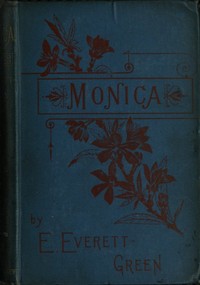
For Monica: A Novel, Volume 2 (of 3) — Story, Setting & Ideas, the stored edition analysis reports 30,957 words, 2 hr 15 min estimated reading time, and 11 detected text sections.
The text analysis averages about 15.6 words per sentence, while the detected sections provide another way to judge how the source is divided.
Project Gutenberg metadata also associates the work with “Love stories,” connecting these edition facts with the source record’s subject description.
Explore this collection
These alternatives are selected using recorded categories and estimated reading time.
About 140 minutes
Marriage Society
32,076 recorded words. 5 minutes difference from this book's estimate.
View Gutenberg source #54940About 127 minutes
Marriage Society
29,174 recorded words. 8 minutes difference from this book's estimate.
View Gutenberg source #54942About 158 minutes
Marriage Society
36,241 recorded words. 23 minutes difference from this book's estimate.
View Gutenberg source #68222Search stored excerpts and compare books → Choose by your preferences →
Choices use stored catalog measurements. Estimates vary with reading speed. A shared category is a catalog label, not a claim that two books have the same argument or literary quality.
Search reads excerpt text stored with this catalog and links to its associated Gutenberg record. The connection is stored in the site database; this tool does not recheck that every excerpt is word-for-word identical to that external record. Excerpt search does not cover every chapter and does not verify historical publication dates.
Catalog snapshot checked: 2026-09-26. Coverage: 89 public books, 89 available source excerpts.
Calculated from edition completeness, EPUB availability, text structure and catalogue metadata. Not a user rating.
Total of 100 points, scaled to a 2.5-5.0 range. Editions with an empty description or a missing EPUB file are not scored.
Public-domain source text
The source text is kept in the dedicated reader, separate from this catalogue record and its commentary.
The second volume of Monica opens with Randolph's departure, leaving Monica alone in her London house. The narrative immediately establishes a pattern of separation and reunion, as Monica obeys her husband's wish to socialize while longing for quiet. Her encounter with Cecilia Bellamy introduces a social circle that contrasts with her private anxieties. The text moves between interior scenes—Monica by the fire with the nurse Wilberforce—and public spaces like rides and tea parties, where Conrad's presence unsettles her. This volume repeatedly uses the motif of the sea and moonlight to frame moments of emotional intensity, as when Monica and Randolph speak of love and parting by the moon-lit water.
The volume’s structure depends on a series of geographical shifts. It begins in Monica’s London house, then moves to a Scottish castle where she and Randolph spend days of happiness. Later chapters return to Trevlyn, the family estate. Each setting carries a different emotional register: London is associated with social obligation and the threat of Conrad; Scotland offers isolation and peace; Trevlyn brings unresolved tensions. The transitions are often abrupt, marked by chapter headings like “A Summons to Trevlyn” and “In Scotland.” These movements mirror Monica’s internal state—she feels “lost and desolate” when alone in London, but “very full of happiness and peace” in the Scottish retreat. The narrative does not linger in any one place, suggesting that stability is elusive.
Two images recur throughout the excerpts: the sea and moonlight. In the climactic scene between Monica and Randolph, they stand looking “over the wide sea with a deep smile,” and Monica speaks of love “for eternity” as the moon lights the water. The sea becomes a symbol of both connection and potential separation—Monica fears that Conrad “will part us if he can,” and the vast expanse of water seems to mirror her uncertainty. Earlier, the moon-lit scene is contrasted with the “dim old castle” in Scotland, where the couple is alone. The text uses these images to create a visual rhythm: bright, open spaces of emotional honesty versus enclosed, shadowy interiors where fear lurks. This pattern reinforces the novel’s concern with visibility and concealment.
Monica repeatedly expresses fears that she cannot fully articulate. She tells Randolph of “premonitions, presentiments” that she cannot shake, and she admits to a “horror” of Conrad that she once tried to suppress. These feelings are not dismissed by the narrative; instead, they are given weight through the structure of the volume. The chapter titled “A Shadow” follows a period of happiness, suggesting that the shadow is always present. Monica’s fear of parting is stated explicitly: “Now I do fear it. I fear it without knowing why.” The text does not resolve whether these premonitions are justified, but it uses them to create tension. The reader is left to wonder whether the shadow will materialize, as the volume ends with Monica still uneasy.
The excerpts rely heavily on dialogue to convey the characters’ inner lives. Conversations between Monica and Randolph are often tender and philosophical, as when they discuss whether love can survive death. In contrast, exchanges with Cecilia Bellamy are marked by social maneuvering—Cecilia’s “plaintive” tone and her insistence on monopolizing Monica reveal a power dynamic. Conrad’s dialogue is not quoted directly in the excerpts, but his presence is felt through Monica’s reactions. The dialogue in the moon-lit scene is particularly structured: Randolph reassures, Monica confesses fear, and they build a shared affirmation of eternal love. This pattern of call-and-response suggests that speech is a way of managing anxiety, but the narrative undercuts it by showing that Monica’s fears persist.
Readers of this volume will notice how the narrative withholds resolution. The happiness Monica finds in Scotland is shadowed by the return to Trevlyn and the unresolved threat of Conrad. The text uses setting and recurring imagery to create a sense of impending crisis, but it does not reveal whether the premonitions will prove true. This volume is best approached as a middle act, where the emotional stakes are raised through contrast and repetition.
Capture what you thought, learned, and would like to remember.