About 135 minutes
Monica: A Novel, Volume 2 (of 3) — Story, Setting & Ideas
Marriage Society
30,957 recorded words. 8 minutes difference from this book's estimate.
View Gutenberg source #54941
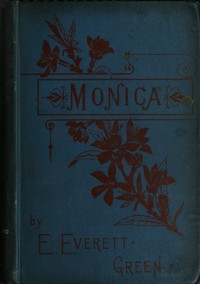
The catalog record for Monica: A Novel, Volume 3 (of 3) — Background and Themes provides practical reading context through 29,174 words, 2 hr 7 min estimated reading time, and 10 detected text sections.
The text analysis averages about 15.3 words per sentence, while the detected sections provide another way to judge how the source is divided.
Project Gutenberg metadata also associates the work with “Love stories,” connecting these edition facts with the source record’s subject description.
Explore this collection
These alternatives are selected using recorded categories and estimated reading time.
About 135 minutes
Marriage Society
30,957 recorded words. 8 minutes difference from this book's estimate.
View Gutenberg source #54941About 140 minutes
Marriage Society
32,076 recorded words. 13 minutes difference from this book's estimate.
View Gutenberg source #54940About 158 minutes
Marriage Society
36,241 recorded words. 31 minutes difference from this book's estimate.
View Gutenberg source #68222Search stored excerpts and compare books → Choose by your preferences →
Choices use stored catalog measurements. Estimates vary with reading speed. A shared category is a catalog label, not a claim that two books have the same argument or literary quality.
Search reads excerpt text stored with this catalog and links to its associated Gutenberg record. The connection is stored in the site database; this tool does not recheck that every excerpt is word-for-word identical to that external record. Excerpt search does not cover every chapter and does not verify historical publication dates.
Catalog snapshot checked: 2026-09-26. Coverage: 89 public books, 89 available source excerpts.
Calculated from edition completeness, EPUB availability, text structure and catalogue metadata. Not a user rating.
Total of 100 points, scaled to a 2.5-5.0 range. Editions with an empty description or a missing EPUB file are not scored.
Public-domain source text
The source text is kept in the dedicated reader, separate from this catalogue record and its commentary.
The volume opens with Monica gently confronting Beatrice, who sits in a boudoir at dusk with unshed tears. Monica's observation—'I begin to think you are getting tired of Trevlyn already'—immediately establishes her perceptive, quiet authority. Beatrice's vehement denial and subsequent confession about Tom Pendrill reveal a pattern of emotional restraint: the characters often speak around their feelings, using indirect questions and physical gestures (a hand laid on a knee, a head buried in hands) to convey distress. The catalog subjects—marriage, forgiveness, love—are present, but the excerpts show these themes emerging through specific, domestic scenes rather than overt moralizing.
Monica's speech is consistently measured and gentle, yet she drives the plot forward. When Beatrice bursts out, 'Oh, don't send me away, Monica!', Monica responds not with alarm but with a calm insistence: 'You are unhappy, you are restless and miserable.' She does not retreat from the truth. Later, when Beatrice weeps over Randolph's memory, Monica offers comfort by linking his death to Beatrice's happiness: 'He would be glad... He loved you dearly.' This ability to reframe grief into hope is a recurring structural device. Monica's authority is not asserted through commands but through persistent, tender questioning. She uses phrases like 'answer me frankly' and 'I did not mean to distress you' to maintain control while appearing solicitous. The narrative voice aligns with her perspective, describing her 'grave gentleness' and 'mute caress,' which reinforces her role as the emotional center of the household.
Beatrice's confession to Monica is the volume's emotional peak, yet it remains circumscribed. She admits misery but cannot articulate its cause directly; instead, she says 'I think I shall die if you do' and later whispers 'Randolph!' as if the name explains everything. The narrator notes that 'the desolation of Monica's life had never come home to her' until this moment, suggesting that Beatrice's own grief is refracted through Monica's loss. The confession is followed by a retreat: Beatrice 'slipped away to relieve her over-burdened heart by a burst of tears.' This pattern of revelation and withdrawal characterizes the novel's treatment of emotion. The catalog subject 'Forgiveness' appears obliquely: Monica forgives Beatrice's earlier reserve, and Beatrice seeks forgiveness for her unhappiness, but the word itself is never spoken in the excerpts. Instead, the narrative shows forgiveness through actions—Monica's continued kindness, her offer to let Beatrice marry from Trevlyn.
Tom Pendrill's return from St. Maws introduces a shift in tone. He announces his marriage plans with blunt humor: 'I think I've waited long enough—pretty well as long as Jacob.' His dialogue is peppered with interruptions and teasing—'Did for Leah—and didn't like her in the end—don't make that your precedent'—which contrasts sharply with Monica's gravity. Tom's proposal is less a romantic declaration than a logistical arrangement: he has already secured half a house, a share of a medical practice, and his aunt's approval. Beatrice responds with playful banter ('Just listen to the tyrant'), and the two engage in a verbal sparring match that references a past quarrel at Oxford. This scene provides the volume's only comic relief, but it also underscores the novel's interest in marriage as a practical institution. Tom's efficiency—'I hate flummery'—suggests that the narrative values straightforwardness over sentiment, even as it dwells on emotional suffering.
Readers should attend to the way Everett-Green uses setting and gesture to convey interior states. The boudoir at dusk, the unshed tears, the kneeling posture—these details carry more weight than direct statements of feeling. The volume's title, 'Monica,' signals her centrality, yet the excerpts show her as a listener and comforter rather than an actor. Her own grief over Randolph is mentioned but not dramatized; it exists as a quiet undercurrent. This restraint is the novel's defining technique, and it rewards careful attention to what is left unsaid.
That rainy afternoon, I kept returning to the quiet ache in Monica’s forgiveness of Beatrice, how restraint itself spoke so loudly. It made me wonder what had come before, so I set the third volume aside and picked up the second, Monica: A Novel, Volume 2 (of 3) — Story, Setting & Ideas, and sat with the tea going cold, tracing the same muted grief backwards.
Use these questions to collect your thoughts before moving on.