About 315 minutes
The Boss of Wind River — Edition Insights
Romantic Drama
72,259 recorded words. 2 minutes difference from this book's estimate.
View Gutenberg source #34775
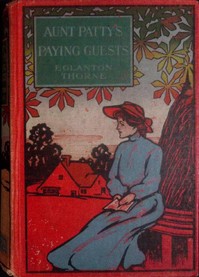
The source record for Aunt Patty's paying guests — Story, Setting & Ideas measures this digital text at 71,864 words, 5 hr 13 min estimated reading time, and 7 detected text sections.
The text analysis averages about 15.1 words per sentence, while the detected sections provide another way to judge how the source is divided.
Project Gutenberg metadata also associates the work with “Love stories,” connecting these edition facts with the source record’s subject description.
Explore this collection
These alternatives are selected using recorded categories and estimated reading time.
About 315 minutes
Romantic Drama
72,259 recorded words. 2 minutes difference from this book's estimate.
View Gutenberg source #34775About 319 minutes
Romantic Drama
73,355 recorded words. 6 minutes difference from this book's estimate.
View Gutenberg source #31057About 329 minutes
Romantic Drama
75,659 recorded words. 16 minutes difference from this book's estimate.
View Gutenberg source #53249Search stored excerpts and compare books → Choose by your preferences →
Choices use stored catalog measurements. Estimates vary with reading speed. A shared category is a catalog label, not a claim that two books have the same argument or literary quality.
Search reads excerpt text stored with this catalog and links to its associated Gutenberg record. The connection is stored in the site database; this tool does not recheck that every excerpt is word-for-word identical to that external record. Excerpt search does not cover every chapter and does not verify historical publication dates.
Catalog snapshot checked: 2026-09-26. Coverage: 89 public books, 89 available source excerpts.
Calculated from edition completeness, EPUB availability, text structure and catalogue metadata. Not a user rating.
Total of 100 points, scaled to a 2.5-5.0 range. Editions with an empty description or a missing EPUB file are not scored.
Public-domain source text
The source text is kept in the dedicated reader, separate from this catalogue record and its commentary.
The novel opens with a blunt medical decree: 'No books for twelve months at least.' Nan, the narrator, has been studying obsessively for Matriculation while working as a governess, rising at six to study by gaslight. The doctor's order forces her to abandon her ambitions, and she is sent to the countryside as a paying guest at her Aunt Patty's house, 'Gay Bowers.' The first chapter establishes Nan's voice—practical, self-aware, and prone to dramatic dismay—and sets up a central tension between intellectual aspiration and physical limits.
Thorne uses precise domestic details to ground the story: the 'little oil-stove' Nan kindles in her room, the 'raw cold' of early mornings, and the 'sick, dizzy' feeling that signals her breakdown. These sensory specifics make Nan's predicament tangible, while the brisk dialogue between Nan and Dr. Algar reveals her stubbornness and the social pressures on a young woman of limited means.
The opening chapter hinges on a single prohibition—'no books'—which Nan experiences as 'a sentence of doom.' Thorne quickly establishes Nan's character through her reaction: she protests, then recounts her punishing study routine. The narrative voice is intimate and confiding, using first-person to draw the reader into Nan's frustration. The doctor's order is not merely a plot device; it reveals the era's attitudes toward women's education and health. Nan's ambition to become a teacher is thwarted not by lack of ability but by physical collapse. The chapter ends with Nan's reluctant acceptance, setting the stage for her move to the country.
Notably, the prohibition is qualified: 'you may not read a storybook now and then.' This small concession hints that the novel itself may serve as Nan's permitted leisure reading, a meta-textual irony. The excerpt also introduces the motif of light and darkness—gaslight, oil-stove, early mornings—which recurs throughout the narrative.
Once at 'Gay Bowers,' Nan encounters a cast of paying guests that includes the American visitors and the enigmatic Miss Cottrell. Thorne populates the household with distinct personalities: Aunt Patty, practical and quietly observant; Mr. Dicks, a worried father; and the cheerful Miss Cottrell, who 'smiled and nodded briskly.' The dialogue is peppered with period idioms and social cues, such as Mr. Dicks's praise of Miss Cottrell as 'an excellent woman.'
A key scene involves a letter from Nan's mother, hinting at 'surprising news' about Nan's sister Olive. Nan's reaction—'the colour flew into my face'—and her disbelief that Olive might be engaged reveal her dependence on family stability. The excerpt also shows Nan's growing attachment to the household, as she observes the dynamics between guests and hosts. Thorne uses these interactions to advance the romantic plot without overt declarations, relying on implication and misdirection.
An outbreak of illness at 'Gay Bowers' forces Nan into quarantine, a plot turn that heightens tension and allows for introspection. The doctor's arrival from London underscores the seriousness of the situation, while Nan's mother's letter reassures her of immunity. Thorne balances the threat of disease with domestic comedy: Aunt Patty's decision to 'turn me out of the house' is presented as a practical measure, not a rejection.
Nan's journey home to Clapham introduces her sister Peggy, an art student who 'never was shy.' The sisters' banter—Peggy complaining that talking to Jack gave her 'a pain at the back of her neck'—lightens the mood. The mystery of Olive's engagement persists, with Nan's curiosity driving the narrative forward. Thorne uses these family scenes to contrast Nan's rural exile with her urban roots, and to reinforce the theme of hidden information.
Thorne employs a first-person narrator whose voice is consistent and engaging. Nan's observations are detailed but not overwrought; she notes the 'welcome shade of trees' on Clapham Common and the 'muslin blinds' at Ivy House. The prose is plain but evocative, relying on concrete nouns and active verbs. The chapter titles—'An Unwelcome Decree,' 'My Equipment,' 'Gay Bowers'—signal a structured, episodic plot.
The excerpts reveal a pattern of delayed revelation: the doctor's decree, the mother's letter, the hinted engagement. Thorne withholds key information to maintain suspense, a technique suited to serialized fiction. The illustrations by W. Rainey, mentioned in the front matter, suggest that visual cues complement the text. Readers should attend to Nan's emotional states—her dismay, curiosity, and relief—as they guide the story's pace.
Thorne's novel rewards attention to its small, telling details: the oil-stove, the muslin blinds, the pain at the back of Peggy's neck. These specifics anchor the romance in a believable world. As you read, note how Nan's voice shifts between earnestness and irony, and how the paying guests' arrivals complicate her quiet country life. The story unfolds through letters, conversations, and Nan's own reflections—each a clue to the larger design.
Reading about Nan, forbidden to study, reminded me of my own summer on a creaking porch, a hidden notebook under the cushion. That ache for quiet learning found an echo in the gentle unhurried pace of Stella Rosevelt — Background and Themes, where a similar longing felt less like a plot point and more like a held breath.
Use these questions to collect your thoughts before moving on.