About 619 minutes
The Woodlanders — Edition Insights
Romantic Drama
142,295 recorded words. 25 minutes difference from this book's estimate.
View Gutenberg source #482
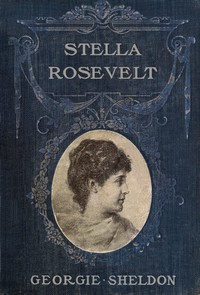
This digital edition of Stella Rosevelt — Background and Themes is described by source-level measurements including 136,415 words, 9 hr 54 min estimated reading time, and 47 detected text sections.
The text analysis averages about 22.0 words per sentence, while the detected sections provide another way to judge how the source is divided.
Project Gutenberg metadata also associates the work with “Love stories,” connecting these edition facts with the source record’s subject description.
Explore this collection
These alternatives are selected using recorded categories and estimated reading time.
About 619 minutes
Romantic Drama
142,295 recorded words. 25 minutes difference from this book's estimate.
View Gutenberg source #482About 500 minutes
Romantic Drama
114,983 recorded words. 94 minutes difference from this book's estimate.
View Gutenberg source #41296About 485 minutes
Romantic Drama
111,340 recorded words. 109 minutes difference from this book's estimate.
View Gutenberg source #54544Search stored excerpts and compare books → Choose by your preferences →
Choices use stored catalog measurements. Estimates vary with reading speed. A shared category is a catalog label, not a claim that two books have the same argument or literary quality.
Search reads excerpt text stored with this catalog and links to its associated Gutenberg record. The connection is stored in the site database; this tool does not recheck that every excerpt is word-for-word identical to that external record. Excerpt search does not cover every chapter and does not verify historical publication dates.
Catalog snapshot checked: 2026-09-26. Coverage: 89 public books, 89 available source excerpts.
Calculated from edition completeness, EPUB availability, text structure and catalogue metadata. Not a user rating.
Total of 100 points, scaled to a 2.5-5.0 range. Editions with an empty description or a missing EPUB file are not scored.
Public-domain source text
The source text is kept in the dedicated reader, separate from this catalogue record and its commentary.
The opening chapter of Stella Rosevelt drops readers into a storm on the Atlantic, with a steamer 'laboriously plowing' waves 'mountain high.' The prose leans into melodrama: the sea is 'angry,' the vessel 'shudders,' and the description of the sky as 'leaden' sets a tone of peril. Yet the catalog subjects—'Love stories; Dime novels; Romance fiction'—suggest a focus on courtship, not shipwreck. The excerpts show that the romance emerges through a cameo ring, a token exchanged between Stella and a man who later reveals himself as Lord Carrol. The ring becomes a plot device for mistaken identity and class tension, as Josephine Richards steals it and is later forced to return it. This note explores how the ring episode exemplifies the dime-novel conventions of secrecy, social climbing, and moral comeuppance.
The ring is introduced as a souvenir exchanged between Stella and Archibald Sherbrooke on shipboard. It bears the initials 'A. S.' and 'two strawberry leaves, their stems crossed.' When Josephine Richards steals it and has it made into a ring, she triggers a chain of exposure. Lord Carrol’s letter demands its return, citing that Stella 'lost' it—a euphemism for theft. The ring functions as a marker of true affection versus counterfeit status: Stella prizes it as 'the gift of a friend,' while Josephine covets it as a trinket. The engraving ties the object to Sherbrooke’s identity, which he concealed under a false name. This aligns with dime-novel tropes of hidden nobility and objects that reveal true character.
Josephine’s theft is presented as both a personal failing and a social transgression. She admits she 'took a notion to have it' and justifies it by Stella’s 'dependent position.' Her mother scolds her: 'you have trinkets enough without taking the only thing a poor girl had.' This moment crystallizes the dime novel’s moral framework: wealth does not excuse dishonesty, and the poor are entitled to their few possessions. Josephine’s defiance—'I’ve half a mind to keep it'—is undercut by her fear of losing Lord Carrol’s favor. The episode thus serves as a lesson in humility and the limits of ambition. The catalog subject 'Romance fiction' here intertwines with a cautionary tale about greed.
The opening chapter’s storm scene is pure melodrama: the sea is 'venomous,' the waves 'swell and rise up like a great black wall.' This hyperbolic style is typical of dime novels, which prioritize emotional intensity over realism. The shipboard setting isolates characters and forces intimacy, a classic romance device. Yet the excerpts do not show Stella’s perspective during the storm; the narrative voice remains omniscient and declarative. The catalog subject 'Love stories' is thus delivered through a lens of heightened danger and moral contrast. The storm may foreshadow later emotional turmoil, but the excerpts limit us to observing the ring’s journey as the central romantic token.
Readers approaching Stella Rosevelt through the lens of its catalog subjects will find a romance driven by objects and secrets rather than direct courtship. The cameo ring carries the weight of identity, theft, and social hierarchy. The excerpts offer a narrow window: the shipboard opening and the ring confrontation. They suggest a narrative where love is mediated by tokens and revealed through letters, not declarations. For a fuller understanding, one must read beyond these passages to see how Stella herself navigates the plot she set in motion.
That cameo ring in Stella Rosevelt stayed with me—how a tiny object carried a whole story of waiting. I found myself thinking of that quiet ache again while thumbing through A new name — A Closer Reading, where names feel like the ring, small but heavy with meaning. It lingered the way certain afternoons do.
Use these questions to collect your thoughts before moving on.