About 315 minutes
The Boss of Wind River — Edition Insights
Romantic Drama
72,259 recorded words. 4 minutes difference from this book's estimate.
View Gutenberg source #34775
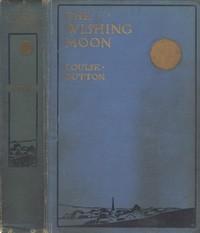
The Wishing Moon — Context and Discussion can be approached with a clearer sense of reading commitment from its source measurements: 73,355 words, 5 hr 19 min estimated reading time, and 7 detected text sections.
The text analysis averages about 14.2 words per sentence, while the detected sections provide another way to judge how the source is divided.
Project Gutenberg metadata also associates the work with “City and town life -- Fiction,” connecting these edition facts with the source record’s subject description.
Explore this collection
These alternatives are selected using recorded categories and estimated reading time.
About 315 minutes
Romantic Drama
72,259 recorded words. 4 minutes difference from this book's estimate.
View Gutenberg source #34775About 313 minutes
Romantic Drama
71,864 recorded words. 6 minutes difference from this book's estimate.
View Gutenberg source #71761About 329 minutes
Romantic Drama
75,659 recorded words. 10 minutes difference from this book's estimate.
View Gutenberg source #53249Search stored excerpts and compare books → Choose by your preferences →
Choices use stored catalog measurements. Estimates vary with reading speed. A shared category is a catalog label, not a claim that two books have the same argument or literary quality.
Search reads excerpt text stored with this catalog and links to its associated Gutenberg record. The connection is stored in the site database; this tool does not recheck that every excerpt is word-for-word identical to that external record. Excerpt search does not cover every chapter and does not verify historical publication dates.
Catalog snapshot checked: 2026-09-26. Coverage: 89 public books, 89 available source excerpts.
Calculated from edition completeness, EPUB availability, text structure and catalogue metadata. Not a user rating.
Total of 100 points, scaled to a 2.5-5.0 range. Editions with an empty description or a missing EPUB file are not scored.
Public-domain source text
The source text is kept in the dedicated reader, separate from this catalogue record and its commentary.
The novel opens with an eleven-year-old Judith Devereux Randall sitting on the front steps of the Randall house, described in precise, almost clinical detail: her white skirts fluffed, hands clasped over thin knees, silk-stockinged legs cuddled together. The narrator notes her bobbed hair was the only one in Green River, a detail that signals both individuality and social scrutiny. The prose is measured, yet the child's inner excitement is palpable—she feels happier than in all her eleven years. This contrast between external stillness and internal intensity recurs throughout the excerpts.
The author's diction in the opening chapter establishes a world of precise social markers. The Randalls do not have supper; they dine at night, like the Everards. The Everards are introduced with a telling asymmetry: the Colonel is old because his hair is white, while his wife wears even more beautiful clothes than mother. Such details are not merely decorative; they encode the hierarchies and anxieties of Green River. The little girl's mother dresses behind a locked door, inaccessible, her evening gown black with shiny spangles—a fairy gown. The locked door and the fairy gown together suggest both allure and distance, a pattern that may inform Judith's later relationships.
The extended carriage scene between Judith and Neil is a masterclass in dialogue as psychological combat. The voices are low-keyed and hurrying, breaking off abruptly. The exchange is built on repetition and contradiction: Judith says I hate you seven times, each iteration more desperate. Neil counters with dry, hard laughter and the flat assertion I don't care. The dialogue is stripped of exposition; the reader must infer the history and stakes from the rhythm of accusation and denial. The author uses short, breathless sentences to convey physical struggle, and the silences between speeches are described as cruel and tense.
The description of the struggle in the buggy is deliberately clumsy and blind. The two figures sway aimlessly, their movements sudden and uncoordinated. The narrator notes that the struggle is like most really significant ones: sudden and clumsy and blind. The physicality is rendered with restraint—pinioned arms, panting sounds, little sobs—but the emotional stakes are high. After the struggle ends, Judith's arms find their way to Neil's shoulders, a gesture that contradicts her words. The author leaves the ambivalence unresolved, trusting the reader to weigh the whispered yes against the embracing arms.
Throughout the excerpts, light and shadow function as emotional barometers. In the opening, the little girl sees mother's electric lights but feels her distance. In the carriage, the two faces are alike in the gloom, white and angry. The shadow figures sway and merge, and the final silence is broken only by a long, tired sigh. The author uses these visual cues to externalize internal states: the fugitive, dancing light in Judith's eyes as a child contrasts with the panting, tearful darkness of the later scene. Silence, too, is weighted—the cruel, tense silence before Neil's laugh, and the exhausted silence after the struggle.
These excerpts reveal an author attentive to the friction between social performance and private emotion. The prose is economical, yet every detail—the locked door, the bobbed hair, the dry laugh—carries significance. Readers may find that the novel's interest lies less in plot than in the precise calibration of its characters' inner lives against the constraints of their world. The carriage scene, in particular, rewards close attention to its rhythmic shifts between speech and silence.
I’ve often mused how Fillmore’s careful diction in The Wishing Moon—that tense carriage scene, every word held like a held breath—finds a quieter echo in The Lady Paramount — Context and Discussion. Both writers trusted restraint over flourish. Their sentences feel like old friends, leaving room for the reader to simply sit alongside them. A gentle kinship, that. Years of shelving taught me to recognize it.
Save your reaction, strongest insight, and memorable passage.