About 340 minutes
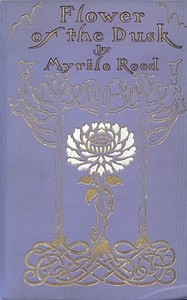
Flower of the Dusk — Themes and Context
Romantic Drama
78,152 recorded words. 1 minutes difference from this book's estimate.
View Gutenberg source #18057

The catalog record for The Three Sapphires — Reading Companion provides practical reading context through 77,809 words, 5 hr 39 min estimated reading time, and 7 detected text sections.
The text analysis averages about 19.6 words per sentence, while the detected sections provide another way to judge how the source is divided.
Project Gutenberg metadata also associates the work with “Love stories,” connecting these edition facts with the source record’s subject description.
Explore this collection
These alternatives are selected using recorded categories and estimated reading time.
About 340 minutes
Romantic Drama
78,152 recorded words. 1 minutes difference from this book's estimate.
View Gutenberg source #18057About 335 minutes
Romantic Drama
77,025 recorded words. 4 minutes difference from this book's estimate.
View Gutenberg source #15473About 329 minutes
Romantic Drama
75,659 recorded words. 10 minutes difference from this book's estimate.
View Gutenberg source #53249Search stored excerpts and compare books → Choose by your preferences →
Choices use stored catalog measurements. Estimates vary with reading speed. A shared category is a catalog label, not a claim that two books have the same argument or literary quality.
Search reads excerpt text stored with this catalog and links to its associated Gutenberg record. The connection is stored in the site database; this tool does not recheck that every excerpt is word-for-word identical to that external record. Excerpt search does not cover every chapter and does not verify historical publication dates.
Catalog snapshot checked: 2026-09-26. Coverage: 89 public books, 89 available source excerpts.
Calculated from edition completeness, EPUB availability, text structure and catalogue metadata. Not a user rating.
Total of 100 points, scaled to a 2.5-5.0 range. Editions with an empty description or a missing EPUB file are not scored.
Public-domain source text
The source text is kept in the dedicated reader, separate from this catalogue record and its commentary.
The novel opens on a marble terrace overlooking the Lake of the Golden Coin, where Lord Victor Gilfain and Captain Swinton share sherry with Prince Ananda, the Oxford-educated shazada. The dialogue immediately establishes a colonial dynamic: the British guests are treated with solicitous hospitality, yet the prince's soft Oriental voice has been set to truer rhythm by Oxford training. The setting—a palace above the maze of Darpore City—hints at the layered power structures that will unfold. The first chapter introduces a leopard shot, a tiger hunt, and a one-eared bison spared as a right-couraged gentleman, signaling a world where codes of honor govern both men and beasts.
The opening chapters establish a rhythm of leisure and danger. The terrace scene, with its sherry and bitters, contrasts sharply with the subsequent tiger hunt, where Lord Victor's emotional release—laughing idiotically, unlacing his shoes—reveals a character unmoored by the violence he has just witnessed. The hunt itself is meticulously detailed: Finnerty measures the tiger's body, Mahadua plucks whiskers for a charm, and the one-eared bison is granted immunity. These details suggest a world where ritual and superstition coexist with British sporting codes. The narrator's attention to the tiger's 'black-rimmed spectacles' and the 'weird reflex of jungle reverence' in Mahadua's eyes indicates a narrative that respects the jungle's own laws, even as it participates in their violation.
Part Three shifts to a stirring conflict between elephants: Burra Moti, a vindictive female, attacks a tusker while Raj Bahadar, the hunting elephant, refuses to charge. The scene is described with mechanical precision—'the impact sounding like the crash of two meeting freight cars'—and the natives decorate a tree like a family of monkeys. This passage, though brief in the excerpts, introduces a new form of combat and a different kind of animal agency. The conch shell's harsh honk signals a shift from the controlled hunt to a more chaotic, indigenous form of engagement. The reader is left to wonder how this episode connects to the earlier tiger hunt and to the spy story promised by the catalog subjects.
The catalog lists 'Spy stories' as a subject, and the later excerpts (not fully reproduced here) likely develop this thread. The opening chapters, however, already plant seeds: Prince Ananda's Oxford connection, the mention of Earl Craig's gun-shyness, and the careful attention to social hierarchies suggest a narrative where loyalties are tested. The tiger hunt itself can be read as a metaphor for the hunt for secrets—the 'three sapphires' of the title may be jewels, but they could also represent something more intangible. The reader should watch for how the camaraderie of the hunt gives way to suspicion, and how the jungle setting becomes a stage for espionage.
Fraser's narrative voice shifts between omniscient description and close focalization on Lord Victor. The opening chapter uses free indirect discourse to capture the young lord's excitement: 'What would the earl say? What would the fellows at the London clubs say?' This technique aligns the reader with his perspective, even as the narrator provides objective details like the tiger's measurements. The inclusion of Hindi terms ('shazada', 'mahout', 'salaam') and the respectful treatment of Mahadua's superstition suggest an attempt at cultural verisimilitude, though the power dynamics remain colonial. The structure—four parts with multiple chapters—promises a multi-stranded plot, and the reader should note how each part introduces new settings and conflicts.
As you read, pay attention to the role of animals: the leopard, the tiger, the bison, the elephants. They are not mere props but active participants in the narrative, each with its own code of honor. The human characters, too, operate within a web of unspoken rules—British, Indian, and jungle. The three sapphires of the title may be literal gems or a cipher for something else; the excerpts do not reveal their nature. Let the hunt guide you, but keep an eye on the shadows.
I found myself lingering over the opening pages of The Three Sapphires—Reading Companion, thinking about how its quiet editorial guidance illuminates the tension between cultures. It reminded me, unexpectedly, of another set of reading notes, one I’ve kept close for years. There’s a similar gentleness in how both trace character and place, The Queen of Farrandale: A Novel — Reading Notes, as if holding a lantern to the text.
Your answers remain private and are stored only in this browser.