About 151 minutes
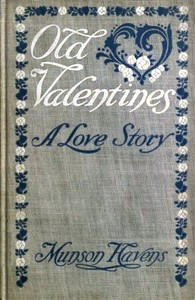
Old valentines — Story, Setting & Ideas
Romantic Drama
34,535 recorded words. 75 minutes difference from this book's estimate.
View Gutenberg source #23886
Before opening Blue-Bird Weather — Story, Setting & Ideas, the edition data offers a quick orientation: 17,264 words, 1 hr 16 min estimated reading time, and 2 detected text sections.
The text analysis averages about 16.1 words per sentence, while the detected sections provide another way to judge how the source is divided.
Project Gutenberg metadata also associates the work with “Love stories,” connecting these edition facts with the source record’s subject description.
Explore this collection
These alternatives are selected using recorded categories and estimated reading time.
About 151 minutes
Romantic Drama
34,535 recorded words. 75 minutes difference from this book's estimate.
View Gutenberg source #23886About 169 minutes
Romantic Drama
38,855 recorded words. 93 minutes difference from this book's estimate.
View Gutenberg source #63653About 171 minutes
Romantic Drama
39,302 recorded words. 95 minutes difference from this book's estimate.
View Gutenberg source #66390Search stored excerpts and compare books → Choose by your preferences →
Choices use stored catalog measurements. Estimates vary with reading speed. A shared category is a catalog label, not a claim that two books have the same argument or literary quality.
Search reads excerpt text stored with this catalog and links to its associated Gutenberg record. The connection is stored in the site database; this tool does not recheck that every excerpt is word-for-word identical to that external record. Excerpt search does not cover every chapter and does not verify historical publication dates.
Catalog snapshot checked: 2026-09-26. Coverage: 89 public books, 89 available source excerpts.
Calculated from edition completeness, EPUB availability, text structure and catalogue metadata. Not a user rating.
Total of 100 points, scaled to a 2.5-5.0 range. Editions with an empty description or a missing EPUB file are not scored.
Public-domain source text
The source text is kept in the dedicated reader, separate from this catalogue record and its commentary.
The opening pages of Blue-Bird Weather establish a landscape of flat marshes, cypress trees, and a submerged causeway where the protagonist Marche arrives by train and rides in a rickety wagon driven by a silent boy. The prose dwells on physical discomfort—the Southern swamp-chill, the need to relight a pipe, heavy gloves—and the boy's naked hands, which Marche notices with concern. This attention to sensory detail and class difference sets the tone for a story that will repeatedly measure distance between characters through their responses to the same environment.
The catalog lists Blue-Bird Weather under both “Love stories” and “Hunting stories,” and the excerpts show how the two categories intertwine. The hunting expedition is not primarily about the pursuit of game; it provides a pretext for proximity and conversation. Marche and the young woman share a luncheon in a duck blind, where he serves coffee from a vacuum bottle and she hands him sandwiches. The setting—a boat, the water, the decoys—frames their dialogue. The text notes that they “scarcely turned for a glance at the water or sky, save when old Uncle Dudley made insulting remarks to some slow-drifting gull.” The hunt itself recedes, becoming background for a different kind of pursuit.
The young woman tells Marche that she and her brother Jim have been “starved” for conversation with someone from “the real world.” The excerpts reveal a pattern of isolation: the boy driver’s “colorless brevity,” the siblings’ five-year seclusion, and the woman’s confession that she wanted to be “a little more significant” than a paid guide. Chambers renders this not through dramatic confession but through small signals—the way she “timidly” ventures questions, then “more boldly” offers comments. The narrative describes her “pent-up and natural enthusiasm” bubbling out, and Marche’s internal realization that he is falling in love is juxtaposed with his practical concern: “What can I do for her?”
Marche is repeatedly identified as a man from the North, and the woman and her brother are Southerners who have experienced “reverses.” The dialogue emphasizes this cultural gap: she says the local people are “unkind” but rather that she and Jim feel “like you” and are starved for talk of “metropolitan affairs.” Marche responds by “talking about things in that Northern world which had once been hers.” The excerpts do not reveal the precise nature of the family’s fall, but the text uses regional identity as a shorthand for shared class and education. The woman’s speech shifts from guarded to fluent as she finds a listener who understands her references.
Readers approaching Blue-Bird Weather should attend to what the excerpts leave unsaid: the exact circumstances that brought the siblings to the marsh, the fate of the father mentioned in passing, and whether Marche’s internal vow to help them leads to action. The story’s emotional weight rests on what is implied in pauses, in the landscape, and in the characters’ careful avoidance of direct declaration. The duck blind, not the drawing room, is where this romance takes shape.
Reading Blue-Bird Weather, I kept returning to how its romance grew inside frost-rimed silence, between two people who rarely filled the air with words. It reminded me of another quiet pairing—the delicate, thorny courtships rooted in soil and season I found tucked inside The Woodlanders — Edition Insights. Both felt less like stories and more like weather I’d once lived through.
Build a private reading journal entry for this title.