About 171 minutes
Imre: A Memorandum — Inside the Classic
Romantic Drama
39,302 recorded words. 2 minutes difference from this book's estimate.
View Gutenberg source #66390
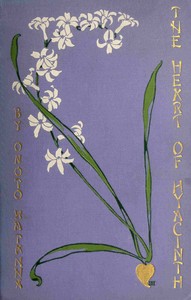
Before opening The Heart of Hyacinth — A Closer Reading, the edition data offers a quick orientation: 38,855 words, 2 hr 49 min estimated reading time, and 31 detected text sections.
The text analysis averages about 13.5 words per sentence, while the detected sections provide another way to judge how the source is divided.
Project Gutenberg metadata also associates the work with “Young women -- Fiction,” connecting these edition facts with the source record’s subject description.
Explore this collection
These alternatives are selected using recorded categories and estimated reading time.
About 171 minutes
Romantic Drama
39,302 recorded words. 2 minutes difference from this book's estimate.
View Gutenberg source #66390About 179 minutes
Romantic Drama
40,996 recorded words. 10 minutes difference from this book's estimate.
View Gutenberg source #29278About 181 minutes
Romantic Drama
41,602 recorded words. 12 minutes difference from this book's estimate.
View Gutenberg source #57099Search stored excerpts and compare books → Choose by your preferences →
Choices use stored catalog measurements. Estimates vary with reading speed. A shared category is a catalog label, not a claim that two books have the same argument or literary quality.
Search reads excerpt text stored with this catalog and links to its associated Gutenberg record. The connection is stored in the site database; this tool does not recheck that every excerpt is word-for-word identical to that external record. Excerpt search does not cover every chapter and does not verify historical publication dates.
Catalog snapshot checked: 2026-09-26. Coverage: 89 public books, 89 available source excerpts.
Calculated from edition completeness, EPUB availability, text structure and catalogue metadata. Not a user rating.
Total of 100 points, scaled to a 2.5-5.0 range. Editions with an empty description or a missing EPUB file are not scored.
Public-domain source text
The source text is kept in the dedicated reader, separate from this catalogue record and its commentary.
Onoto Watanna’s The Heart of Hyacinth opens with a long, painterly description of Sendai and Matsushima Bay, where “Nature has flung out her favors with more than lavish hand.” The prose lingers on jewel-like rocks, pine-crowned islands, and the silent tombs of the Date lords. This deliberate stillness, however, is immediately broken by the arrival of two American men who discuss a missing child and a contested marriage. The novel thus establishes a structural tension between a serene Japanese landscape and the disruptive force of foreign legal and moral claims.
One of the most striking structural devices in the excerpts is the motif of watching and listening. The American lawyer and his companion are aware of “watchers but auditors” behind the paper shoji. A “little rosy-tipped finger” widens a hole, and a blue eye peers through. The men shake the screen, push it aside, and find a girl in a plum-colored kimono who has fallen to the floor. The scene is built around layers of observation: the men are observed by Japanese servants, and the reader observes them all. This pattern of hidden sight recurs in the novel’s framing. The opening description of Sendai presents the landscape as if it were conscious of its own beauty, “queenly-wise towards the sun.” The natural world itself seems to watch. Later, the missionary’s letter reports that the white child “does not know as yet of her true nationality,” implying that others have been watching her identity unfold without her knowledge. The novel repeatedly places characters in positions of being seen without seeing, or seeing without being seen.
The excerpts show a careful choreography of space. The story moves from the broad vista of the bay and temple to the confined interior of a Japanese house, then back to the open road. The lawyer and his companion sit in a room with paper shoji; the listener is just beyond the sliding doors. When the men push the doors aside, the inner apartment is revealed “in its entirety,” and a kimono disappears around an angle. This movement from hidden to exposed, from private to public, is central to the novel’s structure. The child’s identity is similarly shuttled between spaces: she is raised in a Japanese home, but the law wants to place her in an American context. The excerpts do not reveal whether she is moved, but the pattern of spatial transition suggests that the novel will continue to shift between these two worlds, using physical thresholds—doors, screens, roads—to mark moments of revelation or concealment.
Letters and papers carry enormous force in the excerpts. The lawyer holds a document that “is enough in itself,” and a missionary’s letter provides the child’s whereabouts. The plot is driven by these written texts, which are read aloud and discussed. The younger man has not even looked at the papers, yet the lawyer treats them as decisive. This reliance on documents contrasts with the oral and visual culture of the Japanese setting. The eavesdropping girl does not speak; she is discovered by sight and touch. The missionary’s letter is addressed to consuls, not to the local community. The novel thus sets up a conflict between written, legal truth—imported from America—and the lived, embodied reality of the child who has been “brought up entirely as a Japanese girl.” The excerpts do not resolve this conflict, but they make clear that the story will hinge on whose version of evidence prevails.
Watanna uses color and fabric to mark identity and difference. The eavesdropper wears a “bright-hued kimono”; the girl who falls wears a “plum-colored kimono.” The lawyer’s companion notes that “privacy is an unknown quantity” in Japan, but the novel’s visual details suggest that privacy is not absent but differently coded. The bright colors of the kimonos stand out against the neutral paper screens. The blue eye of the listener is a shock: “Our listeners are not merely Japanese, it seems.” Color becomes a sign of racial and cultural crossing. The frontispiece illustration, titled “Hyacinth,” likely depicts the heroine, and the decorative illustrations by Kiyokichi Sano reinforce the importance of visual style. The novel’s prose itself is richly textured, with descriptions of “nameless flowers, large and brilliant in color” blooming about the tombs. These sensory details are not mere decoration; they carry the weight of the story’s central question: how do outward appearances—dress, setting, color—relate to inner identity?
Readers attentive to structure will notice how Watanna builds her story through contrasts: the stillness of the bay versus the agitation of the men, the intimacy of the shoji screen versus the public force of the law, the vivid colors of Japanese dress versus the plain documents of American bureaucracy. The excerpts offer only the opening moves of this drama, but they establish a pattern of opposition and entanglement that likely continues throughout the novel. Pay particular attention to how spaces—rooms, landscapes, bodies—are described as both open and closed, and how the act of looking or listening becomes a form of power.
Reading The Heart of Hyacinth, I kept noticing how its characters watch one another without ever being known, every glance a small performance. It reminded me of an afternoon spent with Aunt Patty's paying guests — Story, Setting & Ideas, where strangers in borrowed rooms share tea yet hold their true reasons close. Both feel like watching quiet doorways, never quite seeing inside.
Capture what you thought, learned, and would like to remember.