About 339 minutes
The Three Sapphires — Reading Companion
Romantic Drama
77,809 recorded words. 1 minutes difference from this book's estimate.
View Gutenberg source #35179
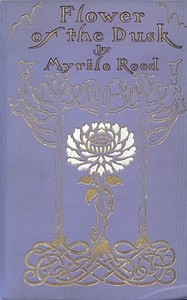
The source record for Flower of the Dusk — Themes and Context measures this digital text at 78,152 words, 5 hr 40 min estimated reading time, and 12 detected text sections.
The text analysis averages about 15.2 words per sentence, while the detected sections provide another way to judge how the source is divided.
Project Gutenberg metadata also associates the work with “People with disabilities -- Fiction,” connecting these edition facts with the source record’s subject description.
Explore this collection
These alternatives are selected using recorded categories and estimated reading time.
About 339 minutes
Romantic Drama
77,809 recorded words. 1 minutes difference from this book's estimate.
View Gutenberg source #35179About 335 minutes
Romantic Drama
77,025 recorded words. 5 minutes difference from this book's estimate.
View Gutenberg source #15473About 329 minutes
Romantic Drama
75,659 recorded words. 11 minutes difference from this book's estimate.
View Gutenberg source #53249Search stored excerpts and compare books → Choose by your preferences →
Choices use stored catalog measurements. Estimates vary with reading speed. A shared category is a catalog label, not a claim that two books have the same argument or literary quality.
Search reads excerpt text stored with this catalog and links to its associated Gutenberg record. The connection is stored in the site database; this tool does not recheck that every excerpt is word-for-word identical to that external record. Excerpt search does not cover every chapter and does not verify historical publication dates.
Catalog snapshot checked: 2026-09-26. Coverage: 89 public books, 89 available source excerpts.
Calculated from edition completeness, EPUB availability, text structure and catalogue metadata. Not a user rating.
Total of 100 points, scaled to a 2.5-5.0 range. Editions with an empty description or a missing EPUB file are not scored.
Public-domain source text
The source text is kept in the dedicated reader, separate from this catalogue record and its commentary.
The novel begins with a blind man facing a sunset, his cane feeling the ground as he dreams of the glory he cannot see. This image of sensory limitation and remembered light recurs throughout the story, which alternates between poetic passages and scenes of sharp, comic dialogue. The structure moves from the solitary figure on the cliff to the bustling household of Miss Mattie, where a conversation about bunions and the power of positive thinking reveals the book's interest in the gap between mind and body.
The opening chapter, "A Maker of Songs," establishes a distinctive sensory world. The protagonist stands "near the edge of the cliff, quite alone, and carefully feeling the ground before him with his cane." He faces the valley, imagining the sunset as "living light from some vast loom of God's." The narrative emphasizes what he cannot see: the pines "darkly purple" against the sky, the "splendid tapestry" of color, the single star near the crescent moon. Instead, he listens with "a secret sense" for music denied to those who see. The passage is rich with remembered sunsets from "beyond the darkness of more than twenty years," suggesting a long-standing blindness. This contrast between inner vision and outer darkness becomes a structural motif, as the story repeatedly moves from such lyrical, introspective moments to scenes of blunt, physical reality.
Chapter II introduces Miss Mattie, whose earthy voice provides a counterpoint to the opening's poetic tone. Her conversation with Doctor Conrad revolves around a woman at the hotel who claims that "there ain't no pain nor disease in the world—it's all imagination." Miss Mattie recounts trying to deny her own back pain: "I says, right out loud: 'My back don't hurt me. It is all imagination.' Then I stood up right quick, and—Lord!" The doctor's eyes twinkle, and he admits he would be tempted to give the book-woman "some of them long narrow pills." This scene uses humor to probe the limits of mind over matter, a theme that echoes the blind man's reliance on memory and imagination. The dialogue is full of dialect and physical comedy, grounding the novel's more ethereal concerns in bodily experience.
Chapter XIV, "Barbara's Birthday," introduces a playful exchange between Barbara and Eloise, who address each other as "Fairy Godmother" and "Fairy Godchild." The chapter title signals a shift toward romantic comedy, with the birthday suggesting a turning point. The fairy-tale nicknames contrast with the earlier realism of Miss Mattie's kitchen, yet both sections share a concern with roles and expectations. The blind man's isolation gives way to social interplay, but the narrative continues to move between different registers: from the intimate to the comic, from the sensory deprivation of the opening to the verbal sparring of later scenes. This structural oscillation keeps the reader attentive to how characters perceive and are perceived by others.
The novel's twelve text sections suggest a deliberate pacing, with chapters that alternate between interior monologue and dialogue, between the blind man's solitary reflections and the bustling life of the village. The excerpts show a writer who uses setting to define mood: the sunset cliff, Miss Mattie's chair, the post office where the book-woman buys stamps. Each location carries its own sensory texture—the "thousand sounds and scents of Spring" in the first chapter, the "long, narrow pills" and "bunion" of the second. The narrative moves without transition from the sublime to the ridiculous, a technique that prevents any single tone from dominating. Readers should attend to how these shifts in voice and scene create a layered portrait of a community and its hidden pains.
Readers will find that the novel rewards attention to its contrasts: between blindness and sight, between poetic aspiration and bodily limitation, between the solitary artist and the talkative community. The excerpts suggest a work that uses structure to explore how people cope with what they cannot change—whether a blind man's darkness or a woman's chronic pain. The humor is often sharp, the sentiment restrained, and the dialogue reveals character more than plot.
That moment in Flower of the Dusk—how the blind man still feels the light change—stays with me, even months later. It made me think of another quiet book I once held close, where rooms hold shadows and someone waits near a window. There’s a tenderness in The Attic Guest: A Novel — Edition Insights that lingers the same way, soft and unhurried, like remembering a voice you almost forgot.
Capture what you thought, learned, and would like to remember.