About 382 minutes
In Red and Gold — A Reader’s Guide
Romantic Drama
87,802 recorded words. 13 minutes difference from this book's estimate.
View Gutenberg source #51974
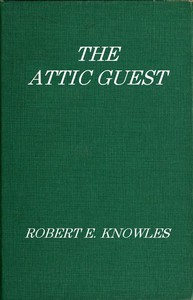
For The Attic Guest: A Novel — Edition Insights, the stored edition analysis reports 90,797 words, 6 hr 35 min estimated reading time, and 8 detected text sections.
The text analysis averages about 18.0 words per sentence, while the detected sections provide another way to judge how the source is divided.
Project Gutenberg metadata also associates the work with “Young women -- Fiction,” connecting these edition facts with the source record’s subject description.
Explore this collection
These alternatives are selected using recorded categories and estimated reading time.
About 382 minutes
Romantic Drama
87,802 recorded words. 13 minutes difference from this book's estimate.
View Gutenberg source #51974About 379 minutes
Romantic Drama
87,012 recorded words. 16 minutes difference from this book's estimate.
View Gutenberg source #70487About 367 minutes
Romantic Drama
84,288 recorded words. 28 minutes difference from this book's estimate.
View Gutenberg source #34208Search stored excerpts and compare books → Choose by your preferences →
Choices use stored catalog measurements. Estimates vary with reading speed. A shared category is a catalog label, not a claim that two books have the same argument or literary quality.
Search reads excerpt text stored with this catalog and links to its associated Gutenberg record. The connection is stored in the site database; this tool does not recheck that every excerpt is word-for-word identical to that external record. Excerpt search does not cover every chapter and does not verify historical publication dates.
Catalog snapshot checked: 2026-09-26. Coverage: 89 public books, 89 available source excerpts.
Calculated from edition completeness, EPUB availability, text structure and catalogue metadata. Not a user rating.
Total of 100 points, scaled to a 2.5-5.0 range. Editions with an empty description or a missing EPUB file are not scored.
Public-domain source text
The source text is kept in the dedicated reader, separate from this catalogue record and its commentary.
The Attic Guest opens with a framing device: the author claims to have received the manuscript from a charming, modest lady, a minister's wife, who shrank from publicity. This sets up a story that is both intimate and mediated, a memoir of a woman's inner life and her marriage to a Scottish-descended clergyman in Virginia. The narrative voice is direct and confessional, often addressing the reader with phrases like 'I can remember' and 'It strikes me as wonderful,' creating a sense of retrospective reflection. The structure alternates between domestic scenes—conversations about carriages, teas, and score cards—and broader social observations, particularly about class pretensions among the congregation. Recurring images of attics, bridges, and rivers suggest a movement between confinement and passage, while the title itself points to a hidden, sacred space within the home.
The foreword establishes a layered authorship: Robert E. Knowles claims to present a story written by a Southern lady who refused to put her name on it. This framing device colors the entire novel, inviting readers to consider the narrative as a genuine confession. The lady is described as having 'tranquil eyes' chastened by sorrow yet aglow with merriment, a duality that echoes the narrator's own voice—at once wistful and sharp. The structure of the book as a memoir allows for direct address and emotional candor, as when the narrator reflects on her 'poor hungry heart' nibbling at 'phantom crumbs.' This framing also distances the reader from the events, creating a sense of intimacy mediated by time and editorial intervention.
The attic of the title is introduced early as a room deemed 'good enough for any elder,' a space that becomes both a literal setting and a symbol. The narrator's journey from socialite to minister's wife involves a movement from public ballrooms to private, humble spaces. The attic recurs as a place of retreat and transformation, culminating in the final chapter, 'Eden in the Attic.' This spatial imagery is paired with a structural pattern of movement between scenes: from the manse to the mission chapel in Swan Hollow, from the rich congregation's drawing rooms to the homes of the poor. The narrator's envy of her husband's work among the lowly is a key tension, and the attic represents the hidden, sacred core of her own life.
Chapter titles such as 'The Bridge That Lay Between' and 'The River Leading to the Sea' signal a preoccupation with transitions. The narrator's marriage to Gordon, a Scottish shepherd's son, bridges her own 'blue-blooded' upbringing and his simple sincerity. The narrative itself moves between social critique—of 'Shanghai nobility' and pretentious parishioners—and personal reflection. The river imagery suggests a flow toward something larger, perhaps spiritual fulfillment. In one scene, the narrator asks Gordon if he ever wished he were a lawyer or doctor, revealing her own dissatisfaction with their constrained means. The structure of the novel mirrors this ebb and flow, alternating between domestic negotiations and broader commentary on class and vocation.
The narrator's voice is the novel's central device: confiding, sometimes rueful, but never fully self-pitying. She describes her own 'starving' heart while acknowledging her husband's deeper joy. The excerpts show her using direct questions ('Do you suppose we could afford a carriage?') and vivid metaphors ('punch the score cards at evening parties') to convey her inner life. The structure of the memoir allows for a selective revelation of events, with the narrator looking back from a vantage point of maturity. This retrospective framing creates a sense of earned wisdom, but the excerpts do not reveal the full arc of her transformation. The reader is left to infer the nature of the 'stern schooling' that shaped her tranquil eyes.
Readers attentive to the novel's structure will notice how the narrator's voice shifts between social commentary and personal longing, and how the attic, bridges, and rivers recur as motifs of transition. The framing device—a manuscript entrusted to an editor—adds a layer of authenticity and distance. Approach the book as a series of vignettes rather than a linear plot, and watch for the way small domestic details (a carriage, a jelly, a score card) carry emotional weight. The narrator's journey is one of gradual alignment with her husband's values, but the excerpts leave the precise turning points ambiguous, inviting careful reading.
When I finished The Attic Guest, I sat with the minister’s wife a while longer, thinking how her quiet compromises felt like rooms we all walk through. That same tender, unhurried ache came back to me days later, leafing through The Three Sapphires — Reading Companion—not for its answers, but for its gentle way of holding unanswered questions. Some books simply keep you company.
A brief reflection can help important ideas stay with you longer.