About 382 minutes
In Red and Gold — A Reader’s Guide
Romantic Drama
87,802 recorded words. 3 minutes difference from this book's estimate.
View Gutenberg source #51974
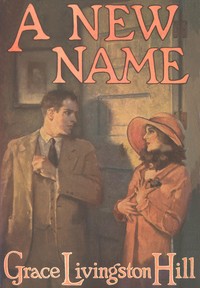
This digital edition of A new name — A Closer Reading is described by source-level measurements including 87,012 words, 6 hr 19 min estimated reading time, and 29 detected text sections.
The text analysis averages about 16.5 words per sentence, while the detected sections provide another way to judge how the source is divided.
Project Gutenberg metadata also associates the work with “Love stories,” connecting these edition facts with the source record’s subject description.
Explore this collection
These alternatives are selected using recorded categories and estimated reading time.
About 382 minutes
Romantic Drama
87,802 recorded words. 3 minutes difference from this book's estimate.
View Gutenberg source #51974About 367 minutes
Romantic Drama
84,288 recorded words. 12 minutes difference from this book's estimate.
View Gutenberg source #34208About 395 minutes
Romantic Drama
90,797 recorded words. 16 minutes difference from this book's estimate.
View Gutenberg source #56675Search stored excerpts and compare books → Choose by your preferences →
Choices use stored catalog measurements. Estimates vary with reading speed. A shared category is a catalog label, not a claim that two books have the same argument or literary quality.
Search reads excerpt text stored with this catalog and links to its associated Gutenberg record. The connection is stored in the site database; this tool does not recheck that every excerpt is word-for-word identical to that external record. Excerpt search does not cover every chapter and does not verify historical publication dates.
Catalog snapshot checked: 2026-09-26. Coverage: 89 public books, 89 available source excerpts.
Calculated from edition completeness, EPUB availability, text structure and catalogue metadata. Not a user rating.
Total of 100 points, scaled to a 2.5-5.0 range. Editions with an empty description or a missing EPUB file are not scored.
Public-domain source text
The source text is kept in the dedicated reader, separate from this catalogue record and its commentary.
The novel opens with Murray Van Rensselaer pacing a hospital reception room, a man unused to waiting. His impatience is rendered through sharp physical details: the fur-lined overcoat he still wears, the cold antiseptic smell, the clock that seems to tick in eons. Hill establishes his privileged background quickly—things usually came at his call—before the accident with Bessie Chapparelle upends his world. The prose mirrors his agitation, with short, exclamatory sentences and a focus on sensory overload: the white starched cap of the receptionist, the tessellated floor, the silver plate on the clock. This opening section is notable for its tight third-person perspective, limited almost entirely to Murray's thoughts and perceptions, a technique Hill maintains throughout the excerpts.
As the story progresses, the pace shifts dramatically. After deciding to disappear, Murray's thoughts become more deliberate. The prose slows when he considers the practicalities of disguise: not smoking, because that was a known habit. Hill lingers on his decision-making process, using longer sentences and a more reflective tone. The change in pace mirrors his internal transformation from impulsive action to cautious planning.
Hill's handling of time becomes more measured in these middle sections. The frantic ticking of the hospital clock gives way to the slower rhythms of daily life: breakfast, walks to the bank, evening dinners. Yet the underlying tension remains. Murray's observation that the pleasant ties that were binding him to Marlborough multiplied suggests a growing entrapment, not by external forces but by his own emerging conscience. The narrative voice here is less agitated, more introspective, allowing the reader to sense his gradual, reluctant transformation.
Hill also uses structural repetition. Both the opening and later sections feature a character waiting—Murray in the hospital, then Murray in his room deciding whether to flee. This parallel emphasizes his changed circumstances. The narrative voice shifts accordingly: from the sharp, present-tense urgency of the hospital scene to the more reflective past-tense of the Marlborough chapters. These changes in pace and perspective are not arbitrary; they chart Murray's psychological journey from panic to a tentative, still-uncertain hope.
Readers should pay attention to how Hill modulates sentence length and internal monologue to signal Murray's emotional state. The early chapters' breathless, fragmented style gives way to a more measured cadence as he assumes his new identity. The recurring motifs—names, clocks, domestic details—are not merely decorative but structural, marking his progress from fugitive to potential participant in a community. The excerpts leave open whether this transformation will hold, but the narrative's careful attention to voice and pace suggests that the answer lies in the small, daily choices Murray makes.
There are moments when Murray, shedding his reckless old self for that borrowed name, reminded me of the quiet way I first understood Stella Rosevelt—not through dramatic turns, but the slow pace of a room becoming familiar. That particular strain between who we were and who we might yet become lingers between both narratives, gently, like afternoon light. Stella Rosevelt — Background and Themes holds that same ache, I think, half-hidden.
Capture what you thought, learned, and would like to remember.