About 238 minutes
Lancaster's Choice — Context and Discussion
Romantic Drama
54,614 recorded words. 8 minutes difference from this book's estimate.
View Gutenberg source #47685
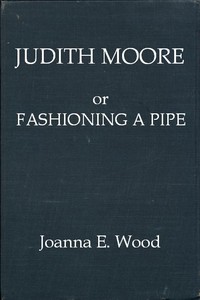
For Judith Moore; or, Fashioning a Pipe — Edition Insights, the stored edition analysis reports 52,862 words, 3 hr 50 min estimated reading time, and 5 detected text sections.
The text analysis averages about 19.5 words per sentence, while the detected sections provide another way to judge how the source is divided.
Project Gutenberg metadata also associates the work with “Love stories,” connecting these edition facts with the source record’s subject description.
Explore this collection
These alternatives are selected using recorded categories and estimated reading time.
About 238 minutes
Romantic Drama
54,614 recorded words. 8 minutes difference from this book's estimate.
View Gutenberg source #47685About 260 minutes
Romantic Drama
59,717 recorded words. 30 minutes difference from this book's estimate.
View Gutenberg source #37528About 261 minutes
Romantic Drama
59,934 recorded words. 31 minutes difference from this book's estimate.
View Gutenberg source #19861Search stored excerpts and compare books → Choose by your preferences →
Choices use stored catalog measurements. Estimates vary with reading speed. A shared category is a catalog label, not a claim that two books have the same argument or literary quality.
Search reads excerpt text stored with this catalog and links to its associated Gutenberg record. The connection is stored in the site database; this tool does not recheck that every excerpt is word-for-word identical to that external record. Excerpt search does not cover every chapter and does not verify historical publication dates.
Catalog snapshot checked: 2026-09-26. Coverage: 89 public books, 89 available source excerpts.
Calculated from edition completeness, EPUB availability, text structure and catalogue metadata. Not a user rating.
Total of 100 points, scaled to a 2.5-5.0 range. Editions with an empty description or a missing EPUB file are not scored.
Public-domain source text
The source text is kept in the dedicated reader, separate from this catalogue record and its commentary.
Joanna E. Wood introduces Andrew Cutler not with a grand entrance but with a catalogue of contradictions: he wears 'the traditional blue jeans of the countryman' yet possesses a neck 'such as we see modelled in old bronzes.' The narrator's eye lingers on the 'little flattened plateau on the bridge' of his nose, calling it 'Spanish,' and remarks that 'Mother Nature must laugh in her sleeve at the descriptive names we tack to her models.' This wry, observational voice—part realist, part ironist—sets the tone for a novel that scrutinizes rural life through precise physical detail and a knowing aside.
The novel's epigraph, drawn from Elizabeth Barrett Browning's 'A Musical Instrument,' recounts how the god Pan 'hacked and hewed' a reed to make a pipe. Wood's title echoes this: Fashioning a Pipe. The poem's violence—'drew the pith, like the heart of a man'—suggests that creation exacts a cost. Whether this applies to Andrew's cultivation of land, Judith's emergence as a singer, or the shaping of character itself, the epigraph frames the narrative as a process of deliberate, even painful, making. Wood does not explain the parallel; she lets the poem stand as a quiet preface to the chapters that follow.
Wood's narrator is a connoisseur of the telling detail. Hiram Green's house has windows with semicircular tops, but 'from economic reasons' the semicircles are filled with wood, giving the house 'eyebrows' and 'a supercilious air.' Mrs. Morris, passing a dyeing woman, notes with authority that 'them 'll streak when they dry.' The narrator observes that Mrs. Green 'was never visible; she was obliterated beneath the burden of work.' These observations are not merely descriptive; they carry judgment, humor, and a sharp sense of social hierarchy. The reader is invited to see the village as the narrator does—with a knowing, slightly amused eye.
Wood uses dialogue to reveal character and class. Mrs. Morris's speech is peppered with colloquialisms: 'I disremember that they used to be so when I was little.' Her greeting to Mrs. Slick—'Been dyeing?'—is affable but pointed, and Mrs. Slick's curt 'Yes' closes the exchange. The Misses Green are 'enshrined' with a 'sallow young Methodist clergyman,' and Mrs. Morris's private comment—'Hester Green's got no spunk or she would not stand it'—exposes her blunt, unsentimental view of marriage. These exchanges are brief but layered, each line carrying the weight of social position and personal history.
The novel opens on Andrew's 'clearing'—'a part of the woodland that Andrew was taking under cultivation.' The description is stark: 'stubborn stumps standing irregularly amid the broken furrows.' This is not a pastoral idyll but a scene of labor and incompletion. The clearing mirrors the narrative's own method: Wood presents a world in the process of being shaped, with rough edges left visible. The reader, like Andrew, must wait to see what will grow from the broken ground.
Wood's novel rewards attention to its surfaces—the cut of a shirt, the shape of a window, the rhythm of a greeting. These details are not decoration but the very stuff of character and conflict. Readers who enjoy fiction that trusts the reader to infer meaning from concrete observation will find in Judith Moore a quiet, steady hand at work.
Reading about Andrew Cutler’s weathered hands against his fine leather belt reminded me of my grandfather’s workshop—rough tools, quiet pride. It stirred the same ache I felt years ago with Imre: A Memorandum — Inside the Classic, where a man’s surface tells only half his story. Both books shaped their raw material slowly, like water on stone, leaving me more thoughtful than before.
Create a short personal record of your experience with this book.